


WDM, WDM Network
D-NET:Your Professional WDM, WDM Network Manufacturer
D-NET, a top Chinese optical communication product manufacturer since 2015, specializes in R&D, production, and sales of fiber-optic equipment. Our core strength lies in our professional research and development team, who are dedicated to pushing the boundaries of optical communication technology. This highly skilled group continuously launches competitive, high-performance products guided by market needs, covering ten+ series like optical modules, passive devices, CWDM/DWDM systems, and more. Serving diverse industries, we provide comprehensive, customizable solutions and exceptional services as a one-stop supplier, fostering global business growth through our innovative and reliable offerings.By partnering with us, you will reap the following advantages:
Premium Quality
D-NET, a leading Guangdong-based high-tech enterprise in optical fiber communication, prioritizes Premium Quality in every aspect of its operations, from cutting-edge R&D to meticulous production processes, ensuring top-notch reliability and satisfaction for its clients.
Customized Services
D-NET, an optical fiber communication specialist, provides OEM customization, including colored logo labels, to suit clients' branding and functional needs.
Extended Warranty
All the products we offer come with a replacement guarantee for 3 months and a comprehensive warranty that spans 3 years, providing consumers with greater peace of mind.
Integrated Solutions
We offer customers a holistic suite of product solutions and complimentary wavelength division transmission scheme design services, ensuring a one-stop shopping experience.
Products



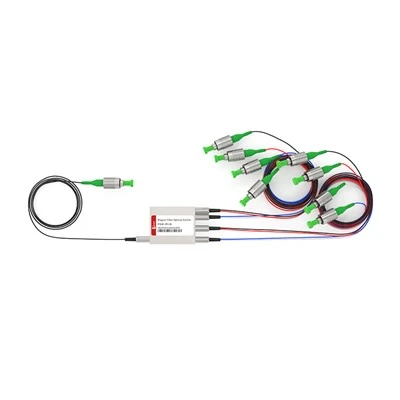
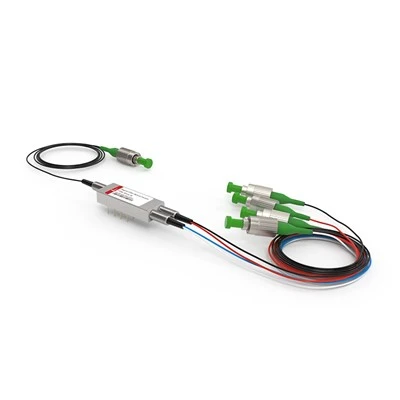
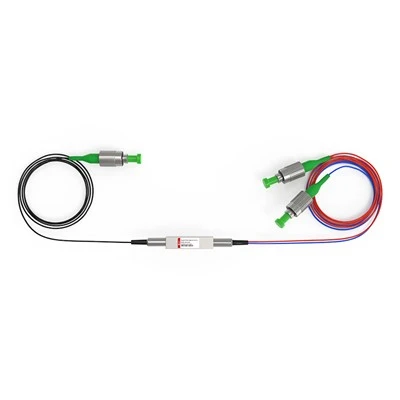


Brief Introduction to WDM
Wavelength Division Multiplexing (WDM) in optical fiber communication is a technology that multiplexes optical signals of different wavelengths into the same optical fiber for transmission. It combines multiple wavelength optical signals into the optical fiber through the multiplexer at the sending end, and separates these optical signals through the demultiplexer at the receiving end, so as to realize the parallel transmission of multiple signals, which greatly improves the transmission capacity and efficiency of the optical fiber.
Features Of WDM
High efficiency: WDM technology enables different wavelengths of light signals to be transmitted through a single fiber at the same time, which greatly improves the efficiency and capacity of communication. This technology can convert a single fiber into multiple "virtual" fibers, each of which operates independently at different wavelengths, allowing the fiber's transmission capacity to be fully utilized
Reliability: Because WDM technology uses optical signal transmission, the optical signal is not subject to electromagnetic interference, so it has high transmission quality and reliability. In addition, WDM systems can also adopt redundant design and protection mechanisms to further improve system stability and reliability.
Flexibility: WDM technology is compatible with other communication technologies, and can interact with SDH, ATM, Ethernet and other protocols. This makes WDM technology can be flexibly applied in different communication networks and systems to meet various complex communication needs.
Scalability: The WDM system can support the transmission of multiple wavelengths of optical signals, and with the development of technology, new wavelengths and channels can be continuously added. This makes the WDM system has good scalability and can be upgraded and expanded according to actual needs.
Economy: Because WDM technology can make full use of the transmission capacity of optical fiber, it can reduce the transmission cost per bit of information. In addition, with the maturity of technology and large-scale production, the cost of WDM equipment is also decreasing, making WDM technology more economical and practical
Types of WDM
CWDM is mainly for the metropolitan area network access layer, with 18 different wavelength channels, each channel with different wavelengths separated by 20nm, wavelength range of 1270nm-1610nm. This technology covers the single mode optical fiber system O, E, S, C, L and other five bands, through the application of CWDM system in the construction of MAN, can greatly improve the transmission capacity of optical fiber, improve the utilization rate of optical fiber resources, so as to reduce the operating cost of the network.
Compared with CWDM, DWDM has a tighter channel interval of 1.6/0.8/0.4nm (corresponding to 200GHz/100GHz/50GHz). DWDM is able to combine more wavelengths on the same fiber, and current DWDM systems can provide 16/20 or 32/40 wave single-fiber transmission capacity, up to 160 waves. This makes the transmission capacity of an optical fiber increased by several times to dozens of times than that of single wavelength transmission, which greatly saves optical fiber resources and reduces the cost of line construction.
FWDM is based on proven film filter technology to blend or separate light signals of different wavelengths over a wide wavelength range. FWDM is widely used in erbium-doped fiber amplifiers (EDFA), Raman fiber amplifiers (RFA) and single-mode fiber communication systems due to its wide channel bandwidth, low insertion loss, high channel isolation, and high environmental stability and reliability.
LWDM usually refers to a wavelength range dense wavelength division multiplexing technology using four wavelength division multiplexing technology in 100G optical modules. It is based on the LAN WDM wavelength defined by IEEE 802.3, and the channel interval is 200 to 800GHz, between DWDM (100GHz, 50GHz) and CWDM (about 3THz). LWDM adopts 12 wavelengths in the band 1269nm to 1332nm in the O-band (1260nm ~ 1360nm) range. The operating wavelength is characterized by zero dispersion, small dispersion, good stability, wavelength interval of 4nm, and mainly covers the range of 10km.
Application of WDM
Long-distance backbone network transmission
In the long-distance backbone network, WDM technology is the key to achieve high speed and large capacity transmission. By combining multiple optical signals of different wavelengths into one composite optical signal for transmission, WDM technology can make full use of the bandwidth resources of optical fibers to meet the needs of high transmission rate and large capacity for long-distance communication. In particular, dense wavelength division multiplexing (DWDM) systems can support the simultaneous transmission of up to 160 wavelengths of optical signals, with data transmission rates of up to 10Gb/s per beam of light, enabling more than 1Tb/s of data transmission on a cable thinner than a human hair.
Data center interconnection
With the rapid development of cloud computing and big data technologies, the amount of data transferred between data centers has increased dramatically. Because of its high transmission capacity and scalability, WDM technology has become an ideal choice for data center interconnection. Through WDM technology, multiple data centers can be connected to achieve high-speed, low-latency data transmission, so as to meet the requirements of cloud computing and big data applications for data transmission speed and capacity.
Man application
In addition to long-distance backbone networks and data center interconnection, WDM technology has also begun to be applied in metropolitan area networks. Especially with the push of coarse wavelength division multiplexing (CWDM) technology, WDM technology is more and more widely used in MAN. CWDM technology uses a wide wavelength window and a large wavelength interval, reducing the requirements for optical devices and thus reducing costs. This makes WDM technology more competitive in the metropolitan area network and able to meet the demand for high-speed, high-capacity communications in and around cities.
Optical Transport Network (OTN)
In the optical transport network (OTN), WDM technology is also an indispensable part. By transmitting multiple wavelengths of light simultaneously on a single fiber, WDM technology enables high-speed data transmission. Especially in DWDM system, higher bandwidth utilization can be achieved by dense wavelength division multiplexing in C-band. This enables the OTN network to support more service types and transmission formats, improving the flexibility and scalability of the network.
Other application areas
In addition to the above main application areas, WDM technology is also widely used in broadband communications, Internet, mobile communications, digital television, video surveillance and other fields. The demand for high speed and high capacity communication in these fields is growing, and WDM technology is one of the key technologies to meet these demands.
Our factory & quipment


FAQ
Q: 1 How does WDM technology work?
Q: 2 What are the advantages of WDM technology?
Q: 3 What is the difference between DWDM and CWDM?
Q: 4 What are the applications of WDM technology?
Q: 5 What are some common components used in WDM systems?
Q: 6 How does WDM technology contribute to the expansion of network capacity?
Q: 7 What are the challenges associated with WDM technology?
Q:8 How do WDM systems handle signal degradation over long distances?
Q: 9 What are the future trends in WDM technology?
We're well-known as one of the leading wdm, wdm network manufacturers and suppliers in China. If you're going to buy high quality wdm, wdm network made in China, welcome to get quotation from our factory.
QSFP-40G-LR4, QSFP56-2X100G-AOC, SFP-10G-ER