


DAC Breakout Cables
Company Profile
Since 2015, D-NET has emerged as a prominent Chinese manufacturer and supplier in the optical communication industry, focusing on the R&D, production, and sales of fiber-optic equipment from our advanced factory. Our strength lies in our dedicated research and development team, which is committed to pushing the limits of optical communication technology. This expert team, guided by market needs, consistently delivers competitive, high-performance products spanning over ten series, including optical modules, passive devices, CWDM/DWDM systems, and more. As a one-stop supplier, we cater to various industries by offering comprehensive, customizable solutions and outstanding services to our esteemed customers. Our innovative and dependable offerings contribute to global business expansion, reinforcing our reputation as a reliable supplier in China and internationally.
Why choose us?
High quality
Our products are manufactured or executed to very high standards, using the finest materials and manufacturing processes.
Long warranty
The long-term warranty is designed to give consumers more confidence that their purchases and services will continue to be valid.
Professional team
Our professional team collaborate and communicate effectively with one another, and are committed to delivering high-quality results. They are capable of handling complex challenges and projects that require their specialized expertise and experience.
Rich experience
Dedicated to strict quality control and attentive customer service, our experienced staff is always available to discuss your requirements and ensure complete customer satisfaction.


What is DAC Breakout Cables
DAC breakout cables refer to Direct Attach Copper cables that are specifically designed to break out a single higher-bandwidth connection into multiple lower-bandwidth channels. These cables are commonly used in data center and high-density cabling environments where space is at a premium, and it's necessary to maximize port usage and cabling efficiency.
For example, a DAC breakout cable might take a twinax cable that supports 25 Gbps or 40 Gbps and split it into four or eight channels, respectively, each capable of transmitting at 6.25 Gbps or 10 Gbps. This allows for better utilization of the available network infrastructure, as higher-speed connections can be distributed across multiple devices or connections.
Benefits of DAC Breakout Cables
Cost-effectiveness
DAC breakout cables are generally less expensive than active optical cables or traditional fiber optic solutions. They are manufactured using copper, a material that is more affordable and widely available compared to the materials used in optical cables.
Simplified deployment
The direct attach nature of DAC cables means they are pre-terminated and factory tested, reducing the time and effort required for installation. They eliminate the need for on-site splicing or termination, which can be both time-consuming and technically challenging.
Lower power consumption
Compared to active optical cables, DAC cables require less power to operate. The absence of active optical components within DAC cables means that they don't consume as much power as AOCs, contributing to overall energy savings in data centers where power usage is a significant concern.
High bandwidth density
DAC breakout cables allow for a higher number of connections in a smaller space, which is essential in densely packed data centers. By breaking out a single connection into multiple channels, they enable better utilization of existing hardware ports and infrastructure.
Improved airflow
Since DAC breakout cables are typically thinner and lighter than fiber optic cables, they can help improve airflow within racks, leading to more efficient cooling and potentially reducing the risk of thermal issues that can impact equipment performance and reliability.
Compatibility with legacy equipment
DAC breakout cables can be used to adapt newer high-speed ports to work with legacy equipment that operates at lower speeds. This flexibility allows organizations to make gradual upgrades to their infrastructure without the need for a complete overhaul.
Signal integrity
Copper cables like DAC breakout cables can provide excellent signal integrity over short to medium distances, which is ideal for the relatively short connections found within most data centers. Properly shielded DAC cables can also minimize electromagnetic interference.
Environmental sustainability
The use of DAC breakout cables can contribute to a more sustainable environment by reducing the demand for rare materials used in fiber optic cables. Additionally, since they consume less power, they have a lower carbon footprint over their lifecycle.
Types of DAC Breakout Cables
QSFP+ to (4) SFP+ breakout cable
This type of cable is used to connect a QSFP+ port supporting 40Gbps to four SFP+ ports, each operating at 10Gbps. The breakout cable enables the distribution of the 40Gbps signal across four separate channels, effectively utilizing the QSFP+ port with legacy SFP+ devices.
QSFP28 to (4) SFP28 breakout cable
Similar to the QSFP+ version but designed for newer equipment that supports 25Gbps per lane. Such a cable would take a 100Gbps QSFP28 port and split it into four 25Gbps SFP28 connections, allowing for more efficient use of high-speed ports with compatible devices.
QSFP-DD to (8) SFP-DD breakout cable
As the name suggests, this cable connects a QSFP-DD port supporting up to 50Gbps or 100Gbps to eight SFP-DD ports, each operating at 10Gbps or 25Gbps, respectively. It's used in scenarios where higher density and bandwidth are needed.
Twinax to Dual (2) SFP+ breakout cable
This cable splits a 25Gbps or 40Gbps twinax connection into two separate SFP+ channels. Each channel operates at 10Gbps or 25Gbps, providing flexibility in matching port speeds between connected devices.
Twinax to Quad (4) SFP+ breakout cable
Similar to the dual breakout cable but further splits the connection into four SFP+ channels. This is particularly useful for applications where a higher number of lower-speed connections is required from a single higher-speed port.
DAC cables with passive and active options
DAC breakout cables can be passive or active. Passive cables are simpler and do not require external power. They are suitable for short distances (usually up to 7 meters for 40Gbps or 10 meters for 10Gbps). Active DAC cables incorporate electronics to extend the usable length of the cable, making them suitable for distances beyond what passive cables can support.
Shielded and unshielded DAC cables
Depending on the environment and the susceptibility to electromagnetic interference (EMI), DAC breakout cables are available with either shielded (SFP) or unshielded (UFP) metalwork. Shielded cables are more robust against EMI and are often used in high-density installations or noisy environments.
Material of DAC Breakout Cables


Direct Attach Copper (DAC) breakout cables are primarily constructed from high-quality copper materials due to its favorable electrical conductivity and cost-effectiveness compared to other metals. The key components of DAC breakout cables include:
Copper conductors: The inner core of DAC cables consists of multiple strands of fine copper wire, which serve as the transmission lines for the electrical signals. These conductors are twisted together to form pairs that are then assembled into the cable structure to carry the data signal.
Copper twist pairing: To reduce crosstalk and electromagnetic interference, the twisted pairs are arranged in a specific pattern that minimizes the noise affecting the signal. This technique is known as twisted pair cabling.
Shielding (if applicable): For environments with higher levels of electromagnetic interference, DAC breakout cables may include additional shielding. This can consist of foil shields or braided shields that encase the twisted pairs to further protect the signal integrity.
Connectors: The connectors at each end of the DAC breakout cable are typically made from durable materials such as nickel-plated brass or gold-plated contacts to ensure good contact and longevity. These connectors are designed to fit the appropriate transceiver ports on networking equipment.
Outer jacket: The exterior of the cable is sheathed in a protective outer jacket, which can be made from PVC (Polyvinyl Chloride), LSZH (Low Smoke Zero Halogen), or other flame-retardant materials. The choice of material depends on the environmental requirements, with LSZH being preferred in environments where smoke and toxic fumes need to be minimized in case of fire.
Stabilizers/ferrules: Some DAC breakout cables may include stabilizers or ferrules between the cable conductors and the connectors to maintain the alignment of the conductors and reduce stress on the delicate solder points.
The choice of materials and design of DAC breakout cables is critical for maintaining the integrity of the high-speed data signals transmitted over the cables. Manufacturers carefully select materials and design features to ensure the cables meet the necessary performance standards while also considering factors such as cost, durability, and environmental impact.
Application of DAC Breakout Cables
Server to switch connectivity
In server racks, DAC breakout cables are frequently employed to connect servers with top-of-rack switches. For example, a server with a QSFP+ port can use a DAC breakout cable to distribute its 40Gbps connection to four individual 10Gbps SFP+ equipped devices within the same rack, optimizing the use of higher-bandwidth ports and reducing the need for additional hardware.
Network upgrades
When upgrading network equipment, DAC breakout cables allow for the seamless integration of new high-speed devices with existing infrastructure. For instance, a new 100Gbps QSFP28 equipped switch can be connected to older 25Gbps SFP28 equipped servers using a QSFP28 to (4) SFP28 breakout cable, facilitating a gradual migration to higher speeds without a complete overhaul of the network.
High-density interconnects
DAC breakout cables enable high-density configurations by allowing a single higher-bandwidth port to service multiple lower-bandwidth devices. This is particularly useful in blade server systems where space is limited, and maximizing port usage is essential.
Link aggregation
In some setups, DAC breakout cables can be used to split a high-speed link into several lower-speed links, which can then be aggregated using techniques like LACP (Link Aggregation Control Protocol) to increase redundancy and bandwidth.
Test and measurement
Network engineers and technicians often use DAC breakout cables during the testing and troubleshooting phases of network deployment. These cables provide a direct and cost-effective way to verify signal quality and throughput across different network segments.
Active optical cable substitutes
In scenarios where the distance between devices is within the reach of DAC cables, these can serve as an alternative to active optical cables, offering similar bandwidth capabilities without the need for additional power sources for the optical transceivers.
Cross-connect solutions
In cross-connect scenarios within colocation facilities or between data centers at close proximity, DAC breakout cables provide a cost-effective means to establish high-speed connections that do not require the expense and maintenance of fiber optic solutions.
Inter-machine communication
DAC breakout cables facilitate communication between different types of networking equipment, such as connecting a network interface card with a modular jack breakout board, allowing for versatile interconnect options.
Material selection
High-purity copper is chosen for the conductors due to its excellent electrical conductivity and cost-effectiveness. The selection of copper alloys or plating, such as oxygen-free copper, may depend on the application requirements.
Drawing conductors
The copper rod is drawn through a series of dies to create fine wires. The diameter of these wires is determined based on the desired cable specifications and the number of conductors needed per twisted pair.
Twisting conductors
The individual copper wires are twisted together in pairs to form twisted pairs. This step is critical for minimizing crosstalk and electromagnetic interference (EMI). Specialized twisting machines control the lay length and twist rate to achieve the desired performance characteristics.
Pairing arrangement
The twisted pairs are organized according to a predefined pattern, which can be either an industry standard like T568A or T568B, or a custom arrangement tailored to specific applications.
Cable jacketing
The paired conductors are then jacketed with insulating materials such as PVC or LSZH. The jacketing process involves extruding the chosen material around the conductor assembly to provide protection against physical damage and to maintain the integrity of the twisted pairs.
Stripping and strain relief
Excess jacket material is stripped from the ends of the cable to prepare for termination. Strain relief boots or tubes are inserted at the connector insertion points to prevent stress from being transferred to the delicate conductors and terminations.
Termination
Precision connectors, such as SFP+, QSFP+, QSFP28, etc., are attached to the ends of the cables. This process often involves soldering the conductors to the pins within the connector housing and securing the connector to the cable with a strain relief boot to withstand the mechanical stresses of plugging and unplugging.
Testing
After the connectors are in place, the cables undergo rigorous testing to ensure they meet the specified performance criteria. Tests include checking the cable's impedance, return loss, crosstalk, and overall signal integrity.
Certification
Once tested, cables are certified to comply with industry standards such as IEEE 802.3 or Ethernet specifications. Certifications may also include optical loss testing if the cable is an active copper cable, which includes onboard optical transceivers.
Packaging
Finally, the cables are packaged appropriately for shipping, ensuring they remain undamaged during transit. Packaging may include reels, boxes, or other protective measures to safeguard the delicate connectors and cable integrity.
Components of DAC Breakout Cables
Conductors
The core of any DAC cable consists of multiple strands of high-purity copper. The number and gauge of these strands will vary depending on the cable's intended bandwidth and the number of individual channels required after breakout. For example, a QSFP+ to (4) SFP+ DAC breakout cable will have four smaller conductors that emerge from a larger, higher-bandwidth interface.
Twisted pairs and shielding
To minimize crosstalk and EMI, the individual copper strands are twisted into pairs. Each twisted pair is typically shielded with foil or braided shielding to further reduce interference from external sources. The twisting and shielding work together to maintain signal integrity over the length of the cable.
Cable jacket
The entire assembly, including the twisted pairs and any shielding, is encased within an insulative jacket. Common materials for this jacket include Polyvinyl Chloride (PVC), Low Smoke Zero Halogen (LSZH), or other flame-retardant materials. The choice of jacket material depends on the environmental conditions and safety regulations of the installation environment.
Strain relief
Strain relief is integrated into the design of DAC breakout cables to protect the delicate connectors and cable termination points from the mechanical stresses that occur during installation and daily use. This can be achieved through molded boots or reinforced sections of thicker jacket material.
Connectors
At each end of the DAC breakout cable, precision-engineered connectors mate with corresponding interfaces on networking hardware. These connectors are specifically designed to meet the mechanical and electrical specifications of the relevant industry standards, such as SFP+, QSFP+, QSFP28, etc. The connector design must accommodate the breakout function, enabling the higher-bandwidth interface to divide into multiple lower-bandwidth channels upon connection.
Optimal performance features (for active DAC cables)
Some DAC breakout cables may incorporate active components, such as onboard electronics or optical transceivers, to extend reach or enhance signal integrity. These active features can include equalization, retransmission, or conversion to optical signals within the cable assembly itself.
Certification labels and markings
Each DAC breakout cable will have certification labels indicating compliance with specific industry standards and performance criteria. Additionally, markings such as part numbers, date codes, and manufacturer information are included for traceability and identification purposes.
Organization tabs and wraps
For ease of management and routing, DAC breakout cables may come with organizational features like tie wraps, velcro straps, or color-coded identification tabs. These help in managing the cable clutter and maintaining order within the server racks or data center infrastructure.
How to Maintain DAC Breakout Cables

Regular inspection
Periodically check the cables for signs of wear, such as fraying, kinks, or cuts. Look for any physical damage that might compromise the integrity of the cable or connectors.
Clean connectors
Dust and dirt can accumulate on the connectors, leading to poor connections. Use a soft cloth or designated cleaning tools to wipe down the connectors gently. Avoid using excessive force or solvents that could damage the connector finish.
Avoid excessive bending
When moving or rearranging cables, avoid bending them beyond their minimum bend radius. Excessive bending can damage the internal conductors and affect signal quality.
Proper routing
Organize cables neatly, using cable ties, straps, or cable management systems. Improper routing can lead to strain on the connectors and cable jacket, causing premature failure.
Protection from environmental hazards
Keep cables away from sources of heat, direct sunlight, and areas with high humidity. These conditions can degrade the cable materials over time.
Preventative maintenance
Schedule regular maintenance windows to inspect and replace any damaged cables before they cause system outages or downtime.
Handle with care
When disconnecting or connecting cables, grip the connector housing firmly rather than the cable itself. This helps prevent stress on the cable body and reduces the risk of breaking the internal conductors or damaging the connector interface.
Monitor performance
Keep an eye on network performance metrics to detect any anomalies that might indicate issues with the DAC cables. If you notice a drop in throughput or increased packet loss, investigate the cables as a potential source of the problem.
Replace damaged components
Do not attempt to repair damaged cables yourself. Instead, replace any cables with visible damage promptly. Continuing to use damaged cables can result in intermittent failures or complete cable failure.
Record keeping
Maintain accurate records of your cable inventory, including the location, type, and date of installation. This information will be invaluable when troubleshooting issues or planning future upgrades.

How to Choose DAC Breakout Cables
Network interface compatibility: Ensure that the DAC cables are compatible with the port types of the networking equipment. For instance, if you have QSFP+ ports on your switches or servers, choose DAC cables with the appropriate breakout feature, such as (4) SFP+ connectors from a QSFP+ interface.
Bandwidth and speed requirements: Determine the bandwidth and speed your network demands. Choose cables rated for the necessary data transfer rates, which are often specified in terms of gigabits per second (Gbps) or terabits per second (Tbps). Higher-numbered DAC cables, such as 10G DAC, 25G DAC, or 100G DAC, support faster speeds.
Cable length: Consider the distance between the networking devices. DAC cables typically have a maximum recommended length due to signal degradation. Choose a length that accommodates the physical layout without exceeding the maximum supported distance for the cable's category.
Cable type and performance standards: Select cables that comply with industry standards, such as those defined by the Ethernet Alliance, IEEE, or other relevant organizations. Standards like SFP+, QSFP+, QSFP28, etc., dictate the cable's performance characteristics. Also, consider whether you need passive or active DAC cables based on the required reach and whether inline electronics are necessary to maintain signal integrity over longer distances.
Material and shielding: Choose the right cable jacket material for the environment, such as PVC for general use or LSZH for environments where fire hazards are a concern. Additionally, consider the level of shielding needed to protect against electromagnetic interference (EMI) and radio frequency interference (RFI).
Quality and durability: Look for high-quality DAC cables from reputable manufacturers known for reliability. Check reviews, certifications, and warranties offered by the manufacturer. High-quality DAC cables should have durable connectors and robust strain relief to withstand frequent handling and installation.
Cost and budget: While quality should be a priority, it's also important to consider the cost and fit within your budget. Compare prices and features across different brands and models to find the most cost-effective solution without compromising on performance.
Future-proofing: Think about the potential growth or changes in your network. It might be advantageous to invest in cables that offer slightly higher performance than currently needed to accommodate future upgrades without the need for additional purchases.
How DAC Breakout Cables Work
Direct Attach Copper (DAC) breakout cables are specialized network cables used primarily in data centers for connecting switches, routers, and servers at various points within the network infrastructure. They are designed to transmit data at high speeds, and their "breakout" feature refers to their ability to split a higher-capacity port into multiple lower-capacity channels.
The working principle of DAC breakout cables involves the following key components and processes:
Connector types: DAC breakout cables typically feature connectors such as SFP+, QSFP+, QSFP28, among others, which are chosen to match the corresponding ports on networking hardware. For example, a QSFP+ to (4) SFP+ breakout cable connects a QSFP+ port to four separate SFP+ ports, allowing for the distribution of a high-speed connection across multiple devices.
Cable construction: The cable itself consists of multiple strands of copper wire bundled together. In a breakout cable, these strands are internally separated into groups corresponding to each lower-capacity channel that the cable will eventually connect to.
Signal transmission: When a device transmits data through the higher-capacity port connected to the DAC cable, the cable's internal architecture divides the signal among the individual strands of copper wire. At the other end of the cable, the strands are reassembled into separate signals, each one connecting to a different lower-capacity port.
Bandwidth distribution: By distributing the total bandwidth of the higher-capacity connection across multiple strands, the breakout cable effectively allows for parallel data transmission, which can significantly improve overall network throughput.
Electrical isolation: To prevent crosstalk and maintain signal integrity, the strands within the cable are electrically isolated from each other. This isolation is critical for maintaining the quality of the signal as it travels through the cable.
Heat management: High-speed data transmission generates heat, so DAC cables are often equipped with thermal sensors and may be constructed with materials that manage heat effectively to prevent overheating and maintain optimal operating temperatures.
Cable performance: The performance of DAC breakout cables is governed by industry standards, which define parameters such as maximum cable lengths, signal integrity, and power requirements. Manufacturers design their cables to meet or exceed these standards to ensure compatibility and reliability.
DAC breakout cables work by taking a high-throughput connection from a higher-capacity port and distributing it across multiple lower-capacity ports, thus enabling efficient data distribution within a network infrastructure. Their construction, signal transmission methods, and adherence to performance standards all contribute to their effectiveness in supporting high-speed data center operations.
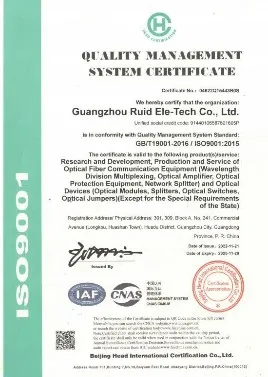
Certifications


FAQ
We're well-known as one of the leading dac breakout cables manufacturers and suppliers in China. If you're going to buy high quality dac breakout cables made in China, welcome to get quotation from our factory.
QSFP56-200G-AOC, SFP-10G-CWDM-1270-10, Mechanical Optical Switch