


Video Transceivers
Company Profile
Since 2015, D-NET has established itself as a leading Chinese manufacturer and supplier of optical communication products, specializing in the R&D, production, and sales of fiber-optic equipment at our state-of-the-art factory. Our core competency stems from a professional research and development team that relentlessly pursues advancements in optical communication technology. Guided by market demands, this highly skilled group consistently introduces competitive, high-performance products across ten or more series, encompassing optical modules, passive devices, CWDM/DWDM systems, and beyond. As a one-stop supplier catering to diverse industries, we provide comprehensive, customizable solutions and exceptional services to our valued customers. Through our innovative and reliable offerings, we foster global business growth, solidifying our position as a trusted supplier in China and beyond.
Why choose us?
High quality
Our products are manufactured or executed to very high standards, using the finest materials and manufacturing processes.
Long warranty
The long-term warranty is designed to give consumers more confidence that their purchases and services will continue to be valid.
Professional team
Our professional team collaborate and communicate effectively with one another, and are committed to delivering high-quality results. They are capable of handling complex challenges and projects that require their specialized expertise and experience.
Rich experience
Dedicated to strict quality control and attentive customer service, our experienced staff is always available to discuss your requirements and ensure complete customer satisfaction.


What is Video Transceivers
Video transceivers are devices that enable the transmission and reception of video signals across various mediums such as copper cables, optical fibers, or wireless networks. These transceivers often incorporate analog-to-digital or digital-to-analog conversion to facilitate the transport of video data over different types of infrastructure while maintaining signal integrity and quality.
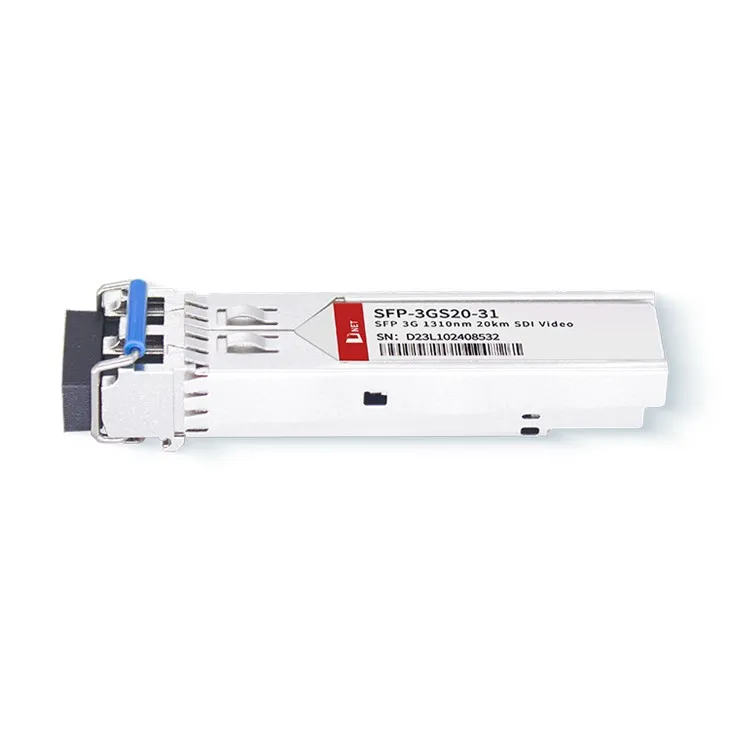
In the context of optical communications, video transceivers might refer to Small Form-Factor Pluggable (SFP) modules designed specifically for video applications, which can handle high-definition video streams over extended distances. These specialized modules may include features such as digital diagnostics to monitor the health of the video link, support for specific protocols optimized for video transport, and error correction mechanisms to ensure the reliability of the video signal.
Benefits of Video Transceivers
Enhanced signal quality
Video transceivers often incorporate advanced modulation and error correction techniques that improve the quality of the video signal over long distances or noisy channels. This ensures that the video remains clear and free from interference.
High bandwidth capacity
Designed to handle high-definition video, these transceivers can support bandwidth-intensive applications without significant degradation in quality. This is particularly important for live streaming and real-time video surveillance.
Flexibility in deployment
Whether it's through fiber optics, coaxial cables, or wireless links, video transceivers can be adapted to suit different installation environments and requirements. This versatility makes them suitable for both indoor and outdoor uses.
Scalability
As video surveillance and conferencing systems grow, video transceivers can easily be added or upgraded to meet increasing demands without the need to overhaul existing infrastructure.
Integration with existing systems
Many video transceivers are designed to integrate seamlessly with existing network and security systems, providing a straightforward upgrade path for enhanced functionality without disrupting ongoing operations.
Remote monitoring and management
With built-in digital diagnostic capabilities, video transceivers can be monitored and managed remotely. This allows for proactive maintenance and quick resolution of issues, reducing downtime and operational costs.
Energy efficiency
Modern video transceivers are engineered to operate efficiently, consuming less power while still delivering high-performance video transmission. This contributes to overall energy savings and supports green initiatives.
Robust security features
For security-sensitive applications, video transceivers can provide encryption and authentication features to safeguard video data from unauthorized access or interception.
Reduced latency
In applications where timing is critical, such as in financial trading floors or in interactive videoconferencing, video transceivers are designed to minimize latency to provide near-instantaneous video transmission.
Cost-effectiveness
By allowing the reuse of existing network infrastructures, video transceivers can reduce the costs associated with new installations or upgrades, making high-quality video transmission more accessible.
Reliability and durability
Designed to withstand harsh conditions, video transceivers can operate reliably in challenging environments, such as industrial sites, outdoor surveillance, or in extreme weather conditions.
Coaxial video transceivers
These are designed to work with standard coaxial cables and are commonly found in older CCTV systems. They use analog signals and may incorporate technologies like Video Balun (Video Bridge Uninterruptible Power Supply) to convert signals between different types of media.
HDBaseT transceivers
High Definition Base T (HDBaseT) transceivers are capable of transmitting high-resolution video, audio, Ethernet, and power over twisted pair cables. They support distances up to 100 meters and are widely used in home automation, digital signage, and unified communications.
Fiber optic video transceivers
Utilizing fiber optic technology, these transceivers provide high bandwidth and are capable of transmitting video over very long distances with minimal signal loss. They are ideal for secure, high-bandwidth applications such as surveillance and command control centers.
Wireless video transceivers
These devices use radio frequencies to transmit video wirelessly. They are highly portable and can be deployed quickly, making them suitable for temporary installations, remote locations, or when running cables is impractical.
IP video transceivers
Internet Protocol (IP) video transceivers send and receive video over IP networks, allowing video to be streamed across LANs or the internet. They support various streaming protocols and can integrate with network video recorders (NVRs) and video management software.
Modular/plugable transceivers
Devices like the Small Form Factor Pluggable (SFP) modules can be inserted into slots on networking equipment to add specific functions, including video transmission over fiber optic cables. They offer flexibility as they can be swapped out depending on the required application.
Embedded transceivers
Some cameras and video devices have transceivers integrated directly into their hardware. These can be either wired or wireless and are designed for seamless connectivity with minimal setup.
Material of Video Transceivers
Video transceivers can be constructed from a variety of materials, each chosen for specific properties that enhance their function and durability. The choice of material depends on the type of transceiver, environmental factors, and the level of performance required. Here are some common materials used in the construction of video transceivers:
Plastic: Many consumer and commercial-grade transceivers use plastic enclosures due to their lightweight nature and ease of manufacturing. Plastic also provides a degree of protection against dust and minor physical impacts.
Metal: High-end or industrial-grade transceivers often feature metal enclosures, typically aluminum or steel, which offer better protection against environmental factors, increased structural integrity, and improved heat dissipation.
Fiber optics: Fiber optic cables are a fundamental component of many transceivers, especially those that require long-distance transmission with minimal signal loss. The core of the fiber is usually made of glass or plastic, while the cladding is often made of another refractive material to contain the light signals within the core.
Copper: Copper is commonly used in the construction of electrical components within transceivers, such as wiring and connectors. It is valued for its excellent conductivity, which is crucial for maintaining signal integrity.
Silicone and rubber: These materials may be used for seals and gaskets in transceivers to provide waterproofing and resistance to dust, temperature extremes, and chemical exposure.
Glass: In certain optical components of transceivers, such as lenses or prisms, glass is used for its clarity, scratch resistance, and stability over a wide temperature range.
Polymer materials: Specialized polymers can be utilized in transceiver components, offering lightweight yet durable alternatives to traditional materials. They can also provide insulation and protection against environmental stressors.
The combination of these materials allows video transceivers to be optimized for their intended use, whether it's for indoor office environments, rugged outdoor conditions, or specialized industrial settings. Manufacturers will often select materials based on the desired balance between cost, performance, weight, and longevity.
Application of Video Transceivers


Surveillance systems
One of the most widespread uses of video transceivers is in security camera systems. These transceivers enable the transmission of video feeds from surveillance cameras to monitors, recording devices, or remote viewing platforms. They can operate over coaxial cables, Ethernet, or wireless networks, depending on the system requirements.
Teleconferencing
Video transceivers play a crucial role in enabling high-definition video communication for conferences, meetings, and lectures. Whether through dedicated video conferencing systems or integrated into collaboration platforms, these transceivers facilitate real-time interactions across distances.
Broadcast media
In the broadcasting industry, video transceivers are used during live events, studio productions, and satellite uplinks. They ensure that high-quality video content is transmitted reliably to broadcast stations, online streaming platforms, and other distribution networks.
Digital signage
Video transceivers enable the display of dynamic content on digital signs in public spaces, retail stores, and corporate environments. They allow for the centralized management and distribution of multimedia content to multiple displays.
Military and defense
In defense applications, video transceivers are used for secure communication, surveillance, and targeting systems. They must adhere to strict standards of reliability and resistance to environmental extremes, often incorporating encryption for data security.
Aerospace
For aerospace applications, video transceivers need to withstand extreme temperatures, vibrations, and radiation levels. They are used for in-flight entertainment systems, cockpit cameras, and satellite communication links.
Marine navigation
On ships and submarines, video transceivers are employed for navigation, underwater imaging, and communication with other vessels or bases ashore. They must be robust enough to withstand the harsh marine environment.
Medical imaging
In the medical field, video transceivers are integral to transmitting images from diagnostic equipment like endoscopes, ultrasound machines, and MRI scanners to monitors and recording devices.
Industrial automation
Video transceivers are used for machine vision systems that inspect products, guide robots, and monitor industrial processes. They can operate in challenging conditions, including high-temperature, high-vibration, and hazardous environments.
Remote monitoring
Video transceivers enable remote monitoring of infrastructure such as pipelines, power lines, and traffic conditions. This allows for real-time assessment and response to issues without the need for physical inspection.
Process of Video Transceivers
Design and prototyping
Engineers design the transceiver's architecture, considering the intended application, required signal quality, bandwidth, and form factor. Computer-aided design (CAD) software is used to create detailed schematics and models. Once designed, prototypes are fabricated to test the initial concept's viability.
Component selection and procurement
Based on the design, a bill of materials (BOM) is created listing all necessary parts, including microprocessors, memory, RF modules, lenses, connectors, and enclosures. Quality suppliers are selected for each component to ensure reliability and performance.
Circuit board fabrication
Printed circuit boards (PCBs) are manufactured using a combination of subtractive and additive processes. Start with a substrate material and apply a layer of copper, which is then patterned to form the conductive traces. Components are then surface-mount (SMT) or through-hole technology (THT) attached to the PCB.
Assembly
Assembly involves mounting the electronic components onto the PCB, which can be done manually or by automated pick-and-place machines. After component placement, the board undergoes reflow soldering to permanently attach the components.
Testing
Each assembled unit undergoes rigorous testing to ensure it functions according to design specifications. Tests might include electrical tests to verify signal integrity, power consumption, and compliance with electromagnetic interference (EMI) standards. Optical transceivers also undergo optical testing to confirm light output, wavelength accuracy, and signal quality.
Programming and calibration
Software is loaded onto the transceiver's microprocessor, configuring it for the intended use. Calibration may be necessary to fine-tune the device's performance parameters.
Enclosure manufacturing
If the transceiver has a housing, it is typically manufactured using injection molding or 3D printing, depending on the complexity and volume of the production. Materials such as plastics, metals, or composites are used to provide the necessary physical protection and environmental sealing.
Final assembly
The PCB is placed into the enclosure, and any remaining mechanical parts like antennas, connectors, or cables are installed. Gaskets or seals may be added for environmental protection.
Quality control
A final quality control check is performed to ensure all aspects of the transceiver meet the quality standards. This includes visual inspections, functionality tests, and sometimes burn-in testing to identify any early failures.
Packaging and shipping
Once approved, the transceivers are packaged appropriately for their destination, whether it's for retail sale, integration into larger systems, or direct shipment to enterprise customers. Packaging materials are chosen to protect the devices during transit.
Components of Video Transceivers
Processing unit
This is the main microprocessor or chipset that handles the video processing tasks. It encodes and decodes video streams, performs compression and decompression, and executes any necessary image adjustments or enhancements.
Camera module
For transceivers that capture video, the camera module is composed of an image sensor (such as a CMOS or CCD sensor), a lens assembly, and sometimes an IR filter to ensure accurate color reproduction. The module captures the video signal and sends it to the processing unit.
Optical components
These include lenses, mirrors, prisms, and sometimes optical filters, which are crucial for directing light to the camera sensor and affecting the quality and characteristics of the captured video.
Transmitter and receiver modules
The transmitter converts the processed video signal into a format suitable for transmission, often using radio frequency (RF) or light (for fiber optic communication). The receiver module does the opposite, converting the incoming signal back into a usable form for further processing or display.
Antennas
In RF-based transceivers, antennas are used to radiate and receive signals. Their design and placement affect the range, directionality, and efficiency of the wireless communication.
Connectors and ports
These physical interfaces allow the transceiver to connect to other devices or networks. Common types include HDMI, USB, Ethernet, coaxial connectors, and fiber optic connectors.
Power supply
This component provides the electrical energy necessary for the transceiver's operation. It can be an internal rechargeable battery, an external power adapter, or it may draw power directly from the network or device it is connected to.
Casing and enclosure
The outer shell of the transceiver protects the internal components from environmental hazards such as dust, moisture, and temperature extremes. It may also feature mounts, brackets, or gaskets to facilitate installation and maintain integrity in challenging settings.
Control interface
This could be a physical interface like buttons or dials, or a software interface that allows users to configure settings, adjust camera angles, or control transmission parameters.
Signal processing hardware
Besides the main processor, specialized hardware like FPGAs (Field-Programmable Gate Arrays) or ASICs (Application-Specific Integrated Circuits) may be included for handling complex signal processing tasks such as noise reduction, motion detection, or video analytics.
Memory
Temporary and permanent storage is provided by onboard RAM and flash memory respectively. RAM is used for buffering and processing video streams, while flash memory may store firmware or settings.
Network interface
This component enables the transceiver to communicate over wired or wireless networks. It may include Ethernet ports, Wi-Fi modules, or cellular modems, depending on the connectivity needs.
Regular inspections
Conduct routine visual inspections of the transceiver's physical condition. Check for signs of damage such as cracks, dents, corrosion, or loose connections. Early identification of physical issues can prevent costly repairs or replacements.
Cleaning
Keep the transceiver clean. Use compressed air to remove dust from the enclosure and ports. For optical components, use specialized optical cleaners and cloths to avoid scratches and ensure clear transmission.
Protection from environmental factors
Ensure that the transceiver is properly sealed against moisture, humidity, and extreme temperatures. Check for any signs of water ingress or condensation, which can lead to corrosion or electrical shorts.
Software updates
Regularly update the transceiver's firmware or software to benefit from bug fixes, security patches, and new features. Outdated software can leave the device vulnerable to security breaches or reduce its functionality.
Calibration
Periodically calibrate the video transceiver to maintain the accuracy of its measurements and video quality. Calibration ensures the device continues to perform within the manufacturer's specifications.
Battery maintenance
If the transceiver is powered by a battery, keep it charged and replace it as recommended by the manufacturer. Batteries have finite lifespans, and undercharging or overcharging can reduce their lifespan.
Heat management
Monitor the transceiver's operating temperature to prevent overheating, which can degrade performance and shorten the lifespan of electronic components. Ensure adequate ventilation and consider using heat sinks or fans as necessary.
Connection checks
Regularly inspect and tighten all cable connections and connectors to prevent signal degradation or loss of connection. Make sure that cables are not pinched or damaged.
Preventive measures
Implement a maintenance schedule that aligns with the manufacturer's recommendations and the transceiver's usage patterns. This can help predict potential issues before they become critical.
Record keeping
Maintain a log of maintenance activities, noting dates, types of service performed, and any parts replaced. This documentation can be valuable for future troubleshooting and warranty claims.
Training
Ensure that personnel responsible for maintaining the transceiver are adequately trained in the proper handling and maintenance procedures to avoid causing damage.
Response to issues
Establish a procedure for responding to malfunctions or errors. Quickly address any issues to minimize downtime and prevent further complications.
How to Choose Video Transceivers

Application requirements
Define the primary use case for the transceiver. Will it be used for live streaming, surveillance, conferencing, or another purpose? The application will dictate the necessary features and capabilities.
Resolution and frame rate
Determine the desired video resolution (e.g., 720p, 1080p, 4K) and frame rate (e.g., 30fps, 60fps). Higher resolutions and frame rates result in smoother, more detailed video but also require more bandwidth and processing power.
Bandwidth and latency
Assess the available network bandwidth and acceptable latency levels. Some applications, like live surgery, require near-zero latency, while others can tolerate higher latency. The transceiver should support the network's bandwidth capacity without compromising video quality.
Form factor
Choose a form factor that suits your setup. Options range from compact modules for integration into other devices to standalone units with built-in displays. Consider the space constraints and whether additional hardware is needed.
Interoperability
Ensure the transceiver is compatible with existing systems and infrastructure. Check for support for industry standards and protocols like H.264, H.265, SIP, and RTSP.
Power supply
Decide on the power source. Some transceivers can operate on standard electrical outlets, while others may require PoE (Power over Ethernet) or battery operation.
Security features
Look for built-in security features such as encryption, secure boot, and authentication mechanisms to protect against unauthorized access and data breaches.
Durability and environmental rating
If the transceiver will be used in harsh environments, select one with an appropriate ingress protection (IP) rating and resistance to factors like temperature extremes, humidity, or dust.


Scalability
Consider whether the transceiver can easily scale with your needs. Some models allow for additional modules or expansion, making them more flexible for future growth.
Support and warranty
Investigate the level of support provided by the manufacturer, including technical assistance, firmware updates, and the length of the warranty period.
Cost
Compare the total cost of ownership, including initial investment, maintenance, and potential upgrade costs. While cheaper options might seem appealing, they could incur higher long-term costs if they don't meet your needs effectively.
User reviews and feedback
Look at user reviews and feedback to understand real-world performance and reliability. This can provide insight into common issues and the manufacturer's responsiveness to customer concerns.
How Video Transceivers Work
Video transceivers are devices that facilitate the bi-directional transmission of video signals. They combine the functions of a transmitter and receiver into a single unit, allowing for both the sending and receiving of video data over a communication medium. Here's a detailed explanation of how video transceivers operate:
Signal encoding and compression: When a video signal enters the transceiver, it undergoes encoding and compression to reduce its bandwidth requirements without significantly degrading the quality. This process often employs codecs such as H.264 or H.265, which balance video quality and file size efficiently.
Digital signal processing (DSP): After compression, the video signal undergoes digital signal processing to enhance features like image resolution, contrast, and noise reduction. DSP can also include motion estimation, intraframe and interframe coding, and other techniques to optimize the signal for transmission.
Modulation: The processed video data is then modulated onto a carrier signal. Modulation can take various forms, such as amplitude modulation (AM), frequency modulation (FM), or phase modulation (PM), depending on the transmission medium and protocol used.
Transmission over the medium: The modulated signal is transmitted over the chosen communication medium, which could be wired (e.g., coaxial cables, Ethernet), wireless (e.g., RF links, satellite, cellular networks), or optical (e.g., fiber optics). The choice of medium affects the signal's integrity, latency, and bandwidth.
Reception and demodulation: At the receiving end, the video transceiver receives the transmitted signal, which may have been subject to noise, interference, or attenuation during transmission. The transceiver demodulates the signal to extract the original video data.
Decompression and signal processing: The transceiver then decompresses the video data to restore it to its original format. It may also apply inverse signal processing to counteract any losses incurred during transmission, ensuring the video quality is as close as possible to the original.
Output to display or storage: Finally, the decoded and processed video signal is outputted to a display for viewing or stored for later retrieval. In bidirectional communication, this process occurs simultaneously for both sending and receiving video streams.
Throughout this process, video transceivers manage a variety of functions, such as error correction to mitigate packet loss, quality of service (QoS) to prioritize video traffic, and adaptive bitrate streaming to adjust video quality based on the current network conditions. These features are particularly important in applications where real-time video transmission is crucial, such as in surveillance, remote surgery, or video conferencing.
Certifications


FAQ
We're well-known as one of the leading video transceivers manufacturers and suppliers in China. If you're going to buy high quality video transceivers made in China, welcome to get quotation from our factory.
QSFP28-100G-ER4, SFP-1G-CWDM-1270-40, SFP-10G-BIDI-1330-10