


Optical Switch
Company Profile
D-NET, a top Chinese optical communication product manufacturer since 2015, specializes in R&D, production, and sales of fiber-optic equipment. Our core strength lies in our professional research and development team, who are dedicated to pushing the boundaries of optical communication technology. This highly skilled group continuously launches competitive, high-performance products guided by market needs, covering ten+ series like optical modules, passive devices, CWDM/DWDM systems, and more. Serving diverse industries, we provide comprehensive, customizable solutions and exceptional services as a one-stop supplier, fostering global business growth through our innovative and reliable offerings.
Why choose us?
High quality
Our products are manufactured or executed to very high standards, using the finest materials and manufacturing processes.
Long warranty
The long-term warranty is designed to give consumers more confidence that their purchases and services will continue to be valid.
Professional team
Our professional team collaborate and communicate effectively with one another, and are committed to delivering high-quality results. They are capable of handling complex challenges and projects that require their specialized expertise and experience.
Rich experience
Dedicated to strict quality control and attentive customer service, our experienced staff is always available to discuss your requirements and ensure complete customer satisfaction.
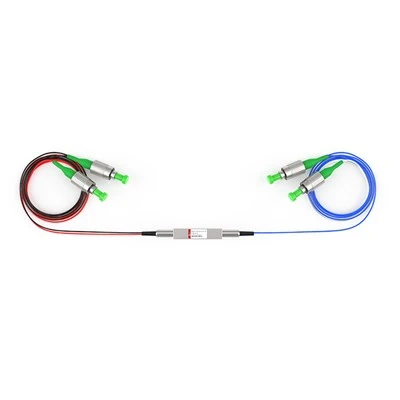

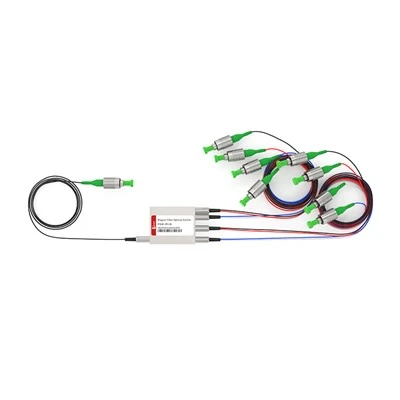
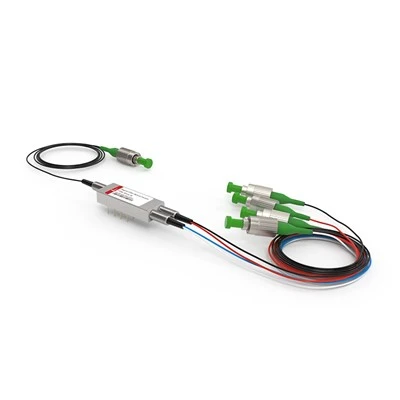
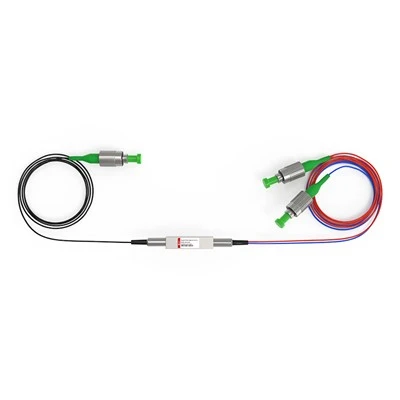


What is Optical Switch
An optical switch is a device that directs light signals along different paths in an optical network. Unlike electrical switches that handle electrical signals, optical switches operate on light waves, typically within fiber optic cables. These switches are essential components in telecommunications and data center networks, where they are used to route traffic, combine and split wavelengths, and enable the flexible allocation of bandwidth.
Optical switches can be classified into several categories based on their operation principles, including mechanical, thermo-optic, acousto-optic, and MEMS (Micro-Electro-Mechanical Systems). Mechanical optical switches physically redirect light by moving mirrors or prisms, while thermal and acoustic methods alter the refractive index of a medium to change the path of light. MEMS switches use microscopic mirrors or other structures that can be moved to redirect the light signal.
Benefits of Optical Switch
High bandwidth capacity
Optical switches can handle large amounts of data due to the high bandwidth capabilities of optical fibers. This allows for the transmission of terabits of data per second, which is critical for meeting the ever-growing demand for high-speed internet and other data-intensive applications.
Low latency
Since optical switches operate directly on light signals, there is minimal delay in processing and routing information. This low latency is particularly beneficial for time-sensitive applications like financial trading, online gaming, and real-time data analytics.
Energy efficiency
Compared to electronic switches, optical switches can reduce power consumption significantly. Optical fibers require less energy to transmit data over long distances, and since there's no need for signal conversion at each hop in an all-optical network, the overall energy efficiency is enhanced.
Scalability
The modular design of optical switches allows for easy scaling of network capacities. Additional switches can be added to the network as needed, making it possible to accommodate future growth without the need for extensive redesigns or replacements.
Reduced equipment footprint
Optical switches, especially when integrated into photonic integrated circuits (PICs), occupy much less space than their electronic counterparts. This means that data centers and communication hubs can be more compact, saving on valuable real estate and infrastructure costs.
Improved network control and flexibility
With optical switches, network operators can route traffic dynamically, adjusting to changing network conditions and load balancing more effectively. This enhances the overall resilience and reliability of the network.
Support for advanced techniques
Optical switches enable the implementation of advanced networking techniques such as Wavelength Division Multiplexing (WDM), which allows for multiple channels of data to be sent down the same fiber simultaneously, greatly increasing the fiber's capacity.
Physical security and redundancy
By using optical switches, it's possible to create redundant paths within the network. If one route fails, traffic can be rerouted through alternative paths quickly, ensuring network continuity and security against physical tampering or accidental damage.
Integration with existing infrastructure
Optical switches can be seamlessly integrated into existing fiber optic networks, offering a straightforward upgrade path to enhance network performance without the need for a complete overhaul.
Future-proofing
Investing in optical switching technologies ensures that networks will be ready to handle emerging applications, such as the Internet of Things (IoT), autonomous vehicles, and the burgeoning field of artificial intelligence, which will require unprecedented levels of data processing and transmission.
Mechanical optical switches
These switches use physical movement to direct light. They can have moving parts like mirrors or prisms that reflect or redirect the light path. Mechanical switches are reliable and have low insertion loss, but they may have slower response times and are subject to wear and tear due to their moving parts.
Thermo-optic switches
These switches exploit the property of some materials where their refractive index changes with temperature. By applying heat locally via electrical current, the path of the light can be altered. Thermo-optic switches are fast and can be integrated into photonic chips, but they consume power continuously and may suffer from thermal crosstalk between adjacent channels.
Acousto-optic switches
In these switches, sound waves are used to modulate the light. An acoustic wave is introduced into the optical medium, causing a change in the refractive index that scatters the light. Acousto-optic switches are relatively fast and can handle high power levels, but they typically require a radio-frequency driver and can have higher losses compared to other types.
Micro-electro-mechanical systems (MEMS) switches
MEMS switches are tiny mechanical structures that can be actuated electrically. They can redirect light beams by physically moving micro-mirrors or other structures. MEMS switches offer very fast switching speeds and low power consumption, and they can be fabricated in large numbers on a single chip, which is ideal for integration in complex photonic circuits.
Optomechanical switches
These switches use the mechanical vibrations of a micro-resonator to control the light. When light is coupled into the resonator, it can induce mechanical motion, which in turn changes the optical path. Optomechanical switches can potentially achieve very low power consumption and have the advantage of being compatible with CMOS fabrication processes.
Hybrid electro-optic switches
These combine different switching mechanisms to leverage the benefits of each. For example, a hybrid switch might use MEMS to physically redirect light while incorporating thermo-optic elements to fine-tune the path. Hybrid switches can offer improved performance characteristics tailored to specific applications.
Nonlinear optical switches
These switches utilize nonlinear optical phenomena such as Kerr effect or two-photon absorption to control the light. They can be based on highly nonlinear optical fibers or chalcogenide glasses. Nonlinear optical switches can operate without any moving parts, but they often require high intensity light and careful management of the light pulses to avoid damaging the material.
Material of Optical Switch
Optical switches employ a variety of materials, each chosen for its specific properties that contribute to efficient operation within an optical communication system. The selection of materials is crucial for optimizing performance parameters such as loss, crosstalk, speed, and stability. Below is an overview of common materials used in the construction of optical switches:
Silica glass: Standard optical fibers and waveguides are often made from silica glass due to its excellent transparency in the near-infrared region. Silica-based thermo-optic switches leverage the fact that the refractive index of silica can be changed with temperature, allowing for light to be directed through the waveguide by applying heat.
Silicon: Silicon is a key material in integrated photonics due to its mature fabrication techniques inherited from the microelectronics industry. Silicon waveguides can be integrated with MEMS structures or thermo-optic elements to create optical switches with high functionality on a single chip. However, silicon is not transparent beyond 1.55 microns, limiting its use for some applications.
Germanium: Often used in conjunction with silicon, germanium is favored for its compatibility with standard CMOS processing and its ability to absorb light at longer wavelengths, including the telecommunications C-band. Germanium is used in optical switches that require photo-detection functions.
Indium phosphide (InP): Indium phosphide has a wider transparency window than silicon and supports a broader range of wavelengths. It is commonly used in high-speed optical switches and photonic integrated circuits (PICs) for WDM systems and other advanced optical networking applications.
Polymer materials: Polymers can be advantageous in optical switches due to their low cost, ease of processing, and ability to be cast into large areas. They also have a relatively wide transparency window that can extend into the short-wave infrared. Polymer-based optical switches can be fabricated using methods such as hot embossing, injection molding, or spin coating.
Chalcogenide glasses: Materials like As2Se3 or As2S3 are chalcogenide glasses that exhibit large nonlinearities and are therefore suitable for all-optical switching, where light signals can be manipulated without converting them to an electrical form. These materials can be used for ultrafast switching and signal processing.
Nanostructured materials: Two-dimensional materials like graphene and transition metal dichalcogenides (TMDCs) are emerging as promising candidates for nonlinear and active optical switching due to their unique electronic and optical properties. They can operate at lower optical intensities compared to traditional materials.
The choice of material for an optical switch depends on the desired application, whether it be telecom infrastructure, data center interconnects, lab-on-a-chip devices, or research into quantum communication. Advances in material science are continually expanding the palette of available materials, pushing the boundaries of what is possible in terms of speed, efficiency, and miniaturization of optical switches.
Application of Optical Switch


Telecommunications networks
Optical switches are integral to the core of modern fiber optic communication systems. They enable the routing, switching, and add-drop functionality required to manage the flow of vast amounts of data across long-haul and metropolitan networks. With Wavelength Division Multiplexing (WDM) technology, optical switches can route different channels (wavelengths) simultaneously, vastly increasing network capacity.
Data centers
The ever-growing demand for cloud services and big data analytics has led to a surge in the use of optical switches within data centers. They facilitate high-speed data transfers between servers and storage systems, reducing latency and improving overall data center efficiency. With the advent of Silicon Photonics, optical switches are becoming more compact and affordable, making them practical for use within data center infrastructure.
Optical cross-connect systems
These are large-scale reconfigurable optical switches used for establishing connections between different fiber lines. They allow network operators to configure the network dynamically in real time, optimizing traffic routes and providing protection against link failures.
Test and measurement equipment
Optical switches are essential in laboratory test setups for directing light to various instruments such as spectrometers, oscilloscopes, and power meters. This allows for the monitoring and characterization of optical signals with precision.
Fiber optic sensing applications
Optical switches can be used to route light to different sections of fiber sensors for distributed temperature and strain monitoring. This is particularly important in structural health monitoring, where the integrity of large structures such as bridges, dams, or oil pipelines needs to be assessed in real time.
Laser systems
In complex laser systems, optical switches can be employed to divert light between different amplifiers, cavities, or outputs, enabling the tuning of the laser's characteristics according to the desired application.
Medical devices
Optical switches find applications in medical imaging equipment and certain therapeutic devices that rely on precise light manipulation. For instance, in endoscopic procedures, optical switches may direct light to different parts of a surgical site for illumination and observation.
Research and development
Academic and industrial research often involves the use of optical switches to facilitate experiments in quantum computing, nonlinear optics, and optical physics. These switches allow researchers to control the flow of light with high precision, enabling the exploration of new optical phenomena and technologies.
Space technologies
Optical switches can be miniaturized and integrated into space-qualified hardware for use in satellite communication systems. They must withstand the harsh conditions of space, including radiation and vacuum, while maintaining reliability and performance.
Process of Optical Switch
Design and simulation
Before any physical manufacturing begins, engineers design optical switch components using computer-aided design (CAD) software. They simulate the behavior of the switch under various operating conditions to optimize its design for maximum efficiency and minimum losses. This stage is crucial for defining the materials, dimensions, and operational mechanisms that will be used in the actual device.
Material selection and preparation
The choice of materials is dictated by the requirements of the optical switch, including the wavelength(s) of operation, environmental conditions, and mechanical stability. Materials such as silica glass, silicon, indium phosphide, polymers, or chalcogenide glasses are prepared according to the specifications. This might involve creating preforms for fiber drawing, wafer fabrication, or synthesizing new materials.
Fabrication of waveguides and components
The waveguides are typically formed by processes such as plasma etching for silicon or Indium Phosphide, or by drawing fibers for silica-based switches. For integrated optical switches, components like waveguides, splitters, and modulators are patterned on wafers using photolithography, ion implantation, or other micromachining techniques.
Assembly and integration
Individual components are assembled into the final configuration of the optical switch. This might involve fusion splicing optical fibers, aligning free-space optics, or bonding integrated optical chips. Precision alignment is critical at this stage to ensure minimal insertion loss and optimal performance.
Actuation mechanism integration
Depending on the type of optical switch—mechanical, thermo-optic, acousto-optic, or all-optical—different actuation mechanisms are integrated. For mechanical switches, micro-mirrors or prisms are precisely positioned using MEMS technology. Thermo-optic switches incorporate resistive heating elements to change the refractive index of the material. Acousto-optic switches use transducers to induce acoustic waves in the medium. All-optical switches might involve integrating nonlinear materials or active media.
Testing and characterization
Each optical switch undergoes rigorous testing to verify its performance parameters, such as insertion loss, return loss, cross-talk, and switching speed. This is done using specialized equipment like optical spectrum analyzers, bit error rate testers, and oscilloscopes. The environmental stability and longevity of the switch are also tested under various stress conditions, including temperature cycling and mechanical shock.
Packaging
Once the optical switch has passed all performance tests, it is packaged for protection and integration into larger systems. Packaging materials and methods vary but often include hermetic sealing to protect the delicate optical and electronic components from environmental factors.
Quality assurance and certification
Finally, the optical switches are inspected for adherence to quality standards and undergo certification processes if they are to be used in regulated industries or environments.
Components of Optical Switch
Waveguides
The fundamental pathways that confine and guide the flow of light within the switch. These can be optical fibers or waveguides fabricated on integrated optics chips, made from materials such as silica, silicon, or indium phosphide.
Input/output ports
These are the points where light enters or exits the switch. In a multi-port switch, there are several I/O ports, each connected to a waveguide.
Actuation mechanism
This component is responsible for physically altering the optical path or changing the optical properties of the medium within the switch. For mechanical switches, this could be a moving mirror or prism. Electro-optic switches use electrodes to apply an electric field to alter the refractive index of the material. Thermo-optic switches heat the waveguide to change its refractive index, while acousto-optic switches use sound waves to scatter light. All-optical switches employ photons to control the transmission of other photons without the need for electrical or acoustic inputs.
Control electronics
For switches that require electrical inputs to function (e.g., electro-optic, thermo-optic, acousto-optic), control electronics are used to generate the necessary signals to operate the actuation mechanism. This can include drivers, power supplies, and signal processing circuits.
Alignment and precision components
Precision is paramount in optical switches, so various alignment components such as micromirror arrays, prisms, or gratings are used to ensure light is directed with minimal loss or deviation. Precision mechanics or piezoelectric actuators may be used for fine adjustments.
Integrated circuitry
In the case of integrated optical switches, circuitry is embedded within the substrate, which may include waveguides, couplers, modulators, and detectors, all integrated onto a single chip.
Protective coatings and isolation
To protect the sensitive optical components from dust, moisture, and mechanical shock, optical switches often have protective coatings and are encapsulated in hermetically sealed packages.
Monitoring and control systems
Some optical switches include built-in monitoring systems to track performance metrics in real-time, as well as control systems for automated operation.
Connectors and interface adapters
These allow the optical switch to connect to external networks or systems, ensuring compatibility and ease of integration.
How to Maintain Optical Switch
Regular inspection
Regularly inspect the optical switch for any signs of physical damage, dirt accumulation, or wear and tear. Check for cracks, scratches, or bends on the waveguides or connectors, and ensure that there is no visible debris on the device or in the immediate environment.
Cleaning procedures
Develop and adhere to a strict cleaning protocol to prevent contamination. Use appropriate cleaning agents and tools, such as lint-free cloths, specially formulated optical cleaners, and fiber optic brushes. Always disconnect the power supply before cleaning and follow the manufacturer's recommendations for cleaning agents and techniques.
Environmental monitoring
Keep environmental conditions within the specified parameters for the optical switch. Maintain proper temperature and humidity levels to prevent condensation or thermal stress. Ensure the switch is protected from electromagnetic interference and excessive vibration.
Calibration and adjustment
Periodically calibrate the optical switch to ensure that it is performing within the expected tolerances. Adjust any alignment issues that may arise over time due to environmental changes or mechanical shifting. Refer to the manufacturer's guidelines for calibration procedures.
Software updates
If the optical switch is controlled via software, make sure that the control system is updated with the latest firmware or software updates provided by the manufacturer. This ensures compatibility with network changes and security protocols.
Preventive maintenance
Implement a preventive maintenance schedule that includes routine checks of the optical and mechanical components. This may involve testing the switch under different operating conditions to ensure it responds as intended.
Training
Ensure that personnel involved in the maintenance of the optical switch are adequately trained. They should understand the switch's operation, potential failure modes, and corrective actions to take in case of issues.
Logging and documentation
Keep comprehensive logs of maintenance activities, including cleaning, inspections, and any repairs performed. Documenting the history of the switch helps identify patterns and predict future maintenance needs.
Replacement of consumables
Monitor and replace any consumable parts, such as optical contact lenses, that may degrade over time due to usage or environmental exposure.
Performance monitoring
Continuously monitor the switch's performance parameters, such as insertion loss, return loss, and switching speed, using appropriate testing equipment. Quickly address any deviations from the normal operating range.
Response to failures
Establish a plan for responding to failures. Have spare parts readily available and know who to contact for technical support from the manufacturer.
How to Choose an Optical Switch
Application requirements
Define the purpose of the optical switch in your system. Is it for switching between different channels, protection switching, or as part of a reconfigurable optical add-drop multiplexer (ROADM)? Understanding the application will guide you towards the appropriate type of switch, such as mechanical, electro-optic, thermo-optic, acousto-optic, or all-optical.
Switching speed
Determine the minimum switching speed required for your application. High-speed applications like all-optical networks may require switches that operate at gigahertz frequencies or faster. Mechanical switches typically have slower response times but might suffice for applications that do not demand high-speed switching.
Port density
Consider the number of ports needed for your switch. More ports can increase the complexity and cost of the switch but provide greater connectivity options. Assess the current and future port requirements to avoid underutilization or the need for premature upgrades.
Size and form factor
Depending on the space constraints of your setup, you may need a compact integrated switch on a chip or a larger standalone unit. Integrated optics offer miniaturization and potentially lower costs, but standalone units might provide higher power and better heat dissipation.
Power consumption
Evaluate the power consumption of the optical switch, especially if it is to be used in battery-powered systems or where energy efficiency is critical. Lower power consumption is desirable, particularly for always-on applications or those with frequent switching cycles.
Insertion loss
Insertion loss refers to the reduction in signal strength when the switch is in the 'ON' state. Choose a switch with low insertion loss to maintain signal integrity and maximize system performance.
Return loss
High return loss is crucial to prevent reflections that can cause signal degradation. Ensure the switch can handle the level of return loss required by your application.
Environmental specifications
Consider the operating environment of the switch, including temperature extremes, vibration, and electromagnetic interference. Select a switch that can withstand these conditions without compromising performance.
Cost
Determine your budget and compare the cost of different switches. While cheaper options might seem appealing, they might not offer the required performance or reliability. Balance cost against the benefits of the switch's features and performance.
Manufacturer reputation
Choose a switch from a reputable manufacturer with a proven track record of quality and reliability. Consider the availability of technical support, warranty terms, and the manufacturer's commitment to research and development, which can lead to improved products and better customer service.
Scalability and future-proofing
Consider whether the switch can be easily upgraded or integrated into future systems. Opt for a modular design that allows for expansion or interchangeable components to adapt to technological advancements.
Compatibility
Ensure the switch is compatible with existing equipment and standards within your network. Check for any necessary certifications or compliance with industry standards.
Test and evaluation
Before finalizing the selection, test the switch in a lab environment or obtain samples for evaluation. This hands-on experience can provide insights into the switch's actual performance and confirm that it meets your criteria.

Optical switches are devices designed to redirect light beams from one path to another within an optical communication system or optical network. The fundamental operation of an optical switch is to control the flow of light based on electrical, thermal, acoustic, or optical signals. These switches play a crucial role in managing the routing of data in telecommunications, computing, and sensing applications.
The working principles of optical switches are integral to the functionality of optical networks, enabling efficient data routing, protection against signal degradation, and dynamic adjustment of optical paths. The choice of optical switch depends on the specific requirements of the application, such as the speed of operation, size, power consumption, and environmental conditions. Advances in photonics continue to expand the capabilities and reduce the footprint of optical switches, driving the evolution of optical communication technologies.
Certifications


FAQ
We're well-known as one of the leading optical switch manufacturers and suppliers in China. If you're going to buy high quality optical switch made in China, welcome to get quotation from our factory.
QSFP28-100G-ER4, SFP-1G-CWDM-1270-40, SFP-10G-DWDM-C60-80