


Optical Transceivers
Company Profile
D-NET, a top Chinese optical communication product manufacturer since 2015, specializes in R&D, production, and sales of fiber-optic equipment. Our core strength lies in our professional research and development team, who are dedicated to pushing the boundaries of optical communication technology. This highly skilled group continuously launches competitive, high-performance products guided by market needs, covering ten+ series like optical modules, passive devices, CWDM/DWDM systems, and more. Serving diverse industries, we provide comprehensive, customizable solutions and exceptional services as a one-stop supplier, fostering global business growth through our innovative and reliable offerings.
Why choose us?
High quality
Our products are manufactured or executed to very high standards, using the finest materials and manufacturing processes.
Long warranty
The long-term warranty is designed to give consumers more confidence that their purchases and services will continue to be valid.
Professional R & D team
D-NET boasts a professional R&D team dedicated to pioneering optical communication technology, consistently delivering competitive, high-performance fiber-optic equipment across multiple series.
Rich experience
Dedicated to strict quality control and attentive customer service, our experienced staff is always available to discuss your requirements and ensure complete customer satisfaction.


What is Optical Transceivers
Optical transceivers are small hardware devices that allow for the transmission and reception of data over fiber optic cables. They are an essential component in networking equipment such as switches, routers, servers, and data storage systems. Optical transceivers convert electrical signals into light pulses for transmission across fiber optics and then back to electrical signals at the receiving end.
These transceivers come in various form factors such as Small Form Factor Pluggable (SFP), 10 Gigabit Small Form Factor Pluggable (SFP+), 25 Gigabit Small Form Factor Pluggable (SFP28), 100 Gigabit QSFP28, and Quad Small Form-factor Pluggable (QSFP+), among others. Each form factor supports different speeds and distances, with newer models supporting higher data rates and extended reach capabilities.
Benefits of Optical Transceivers
High bandwidth
Optical transceivers support high data transfer rates, ranging from 1Gbps to 100Gbps and beyond, depending on the transceiver type. This enables the transmission of vast amounts of data quickly and efficiently, which is particularly important in data-intensive applications.
Long distance transmission
Optical fibers can transmit data over much longer distances compared to traditional copper cabling without the need for signal regeneration. This makes optical transceivers ideal for backbone networks, metropolitan area networks, and inter-datacenter connections.
Immunity to electromagnetic interference (EMI)
Fiber optic cables are not affected by electromagnetic interference, unlike copper cables. This means that optical transceivers can maintain reliable data transmission even in environments with high EMI, such as industrial settings or near other electronic devices.
Lower power consumption
Compared to older technologies, modern optical transceivers consume less power, contributing to energy savings and reduced carbon footprint, especially in large-scale data centers where power usage is a significant concern.
Scalability and modularity
The hot-swappable nature of optical transceivers allows for easy upgrades and maintenance without disrupting the rest of the network. Network operators can add, replace, or upgrade transceivers as needed to accommodate growing bandwidth demands or changes in technology standards.
Compact size and lightweight
Optical transceivers are typically small and lightweight, allowing for space-efficient design of networking equipment. This is particularly beneficial for compact installations, such as high-density server racks.
Cost-effectiveness
Over time, the use of optical transceivers can lead to cost savings due to their lower power consumption, longer lifespans, and reduced need for maintenance. Additionally, the ability to scale bandwidth incrementally rather than replacing entire systems can save capital expenditures.
Security
Optical fibers are difficult to tap into undetected, providing a measure of security against unauthorized surveillance or data interception.
Durability
Optical fibers are quite durable and can withstand harsh environmental conditions, including extreme temperatures, pressure, and vibrations, which makes optical transceivers suitable for a wide array of deployment scenarios.
Flexibility in wavelengths
Optical transceivers can support various wavelengths (colors) of light, allowing for dense wavelength division multiplexing (DWDM), which enables the transmission of multiple data channels over the same fiber strand, significantly increasing the capacity of fiber optic networks.
Small form-factor pluggable (SFP)
This is a popular transceiver module designed for use in networking hardware. SFPs can support a variety of protocols and media types, including single-mode and multi-mode fiber, as well as speeds up to 4.25 Gbps.
SFP+ (10 gigabit small form-factor pluggable)
An enhanced version of the SFP, SFP+ modules offer data rates up to 10 Gbps and are commonly used in data center applications, enterprise Ethernet, and storage area networks (SANs).
SFP28 (25 gigabit small form-factor pluggable)
Similar to SFP+ but with increased bandwidth, SFP28 modules support up to 25 Gbps, catering to the demand for higher data rates in modern network infrastructures.
QSFP (quad small form-factor pluggable)
The QSFP form factor offers four independent channels on a single module, potentially providing up to 4x the bandwidth of standard SFP modules. QSFPs are available in variants such as QSFP+ (up to 40 Gbps) and QSFP28 (up to 25 Gbps per channel).
QSFP+ (100 gigabit quad small form-factor pluggable)
This module extends the QSFP family to support 100 Gbps, often through the use of 25 Gbps lanes or by using multiple modulation techniques to increase bandwidth over a given fiber type.
QSFP28
Similar to QSFP+ but specifically designed for 25 Gbps per lane, QSFP28 modules can provide up to 100 Gbps when all four lanes are used together.
CXP (cable extension pluggable)
The CXP transceiver module is designed for extremely high-throughput applications, offering up to 100 Gbps of aggregate bandwidth over each channel, totaling 320 Gbps in a single module.
XFP (10 gigabit extended small form-factor pluggable)
XFPs are another 10 Gbps form factor, slightly larger than SFP+, and are used in similar applications but might be favored for certain vendor equipment or specific technical requirements.
CWDM (coarse wavelength division multiplexing) and DWDM (dense wavelength division multiplexing)
These transceivers are designed for use in fiber optic systems that utilize multiple wavelengths over the same fiber. CWDM modules support up to 18 different wavelengths, while DWDM modules support a higher number of very closely spaced wavelengths, allowing for greater data capacity over a single fiber.
BiDi (bidirectional) transceivers
These specialized transceivers use two wavelengths, one for transmitting and one for receiving data, in the opposite directions on a single fiber. BiDi transceivers are particularly useful for reducing cabling costs in situations where only one fiber is available.
Material of Optical Transceivers
Optical transceivers are composed of a variety of materials engineered to work together efficiently for light transmission, modulation, and detection. Here are some key materials used in the construction of optical transceivers:
Optical fiber: The core material for transmitting light is optical fiber, usually made from silica glass or silicon dioxide. Single-mode fibers have a smaller core diameter, allowing for longer transmission distances, while multi-mode fibers have a larger core diameter, suitable for shorter distances.
Transmitter laser diodes (LDs) or light-emitting diodes (LEDs): LDs are used for higher-speed applications, emitting coherent light, while LEDs emit incoherent light. Both are typically made from compounds of indium, gallium, and arsenide (InGaAs) or indium, phosphide, and gallium (InPGa).
Receiver photodiodes: These convert incoming light back into electrical signals. Photodiodes are made using materials such as silicon (for lower cost, lower speed applications) or indium phosphide (for higher speed, longer wavelength applications).
Integrated circuit (IC) packages: The electronics that drive the laser or LED and process the incoming light are housed in IC packages. These packages can be made from ceramic or plastic materials, depending on the performance required.
Colored windows (wavelength selectors): In CWDM transceivers, colored glass or plastic windows are used to separate the wavelengths being transmitted.
Thermal management components: Optical transceivers may include heat sinks, temperature sensors, or thermoelectric coolers (TECs) to manage the heat generated by the laser diodes and maintain optimal operating temperatures. These components can be made from materials like aluminum, copper, or ceramics.
Optical isolators and circulators: Some transceiver designs incorporate isolators and circulators to prevent feedback loops and ensure unidirectional light flow. These components are made from special magnetic materials that interact with light.
Connector materials: The physical connection points at the ends of the transceivers, such as LC, SC, or ST connectors, are generally made from zirconia ceramic for precision alignment, with metal (usually gold-plated) for electrical contact.
Encapsulation: The transceiver housing itself is typically made from high-quality plastics or metals to protect the internal components from environmental factors and ensure reliability.
Printed circuit boards (PCBs): The PCBs within the transceiver contain the electrical circuits that control the lasers and receive signals from the photodiodes. They are made from substrates such as FR4 epoxy, with conductive layers made from copper or other metals.
The choice of materials in optical transceivers is critical for achieving the necessary balance between performance, reliability, and cost-effectiveness. Advanced transceivers may also incorporate additional materials or technologies to enhance functionality, such as waveguides, optical amplifiers, or optical attenuators.
Application of Optical Transceivers


Telecommunications networks
Optical transceivers are integral to long-haul and metropolitan telecommunication networks. They enable the transmission of vast amounts of data over thousands of kilometers with minimal signal loss. DWDM transceivers, in particular, allow multiple channels of data to be sent down a single fiber, significantly increasing bandwidth.
Data centers
With the ever-growing demand for cloud services and big data analytics, data centers rely heavily on optical transceivers to interconnect servers, switches, and storage systems at speeds ranging from 1Gbps to 100Gbps and beyond. QSFP+ and QSFP28 transceivers are particularly popular due to their high-density and high-speed capabilities.
Fiber-to-the-home (FTTH)
Optical transceivers play a crucial role in broadband internet delivery directly to residences and businesses. They are found in optical network terminals (ONTs) and optical line terminals (OLTs), facilitating the delivery of high-speed internet, voice, and video services.
CATV/Broadband
In cable television (CATV) and broadband access networks, optical transceivers facilitate the transport of high-definition television signals and high-speed internet access to subscribers. CWDM transceivers are often used in these applications due to their cost-effective nature.
Industrial automation
Optical transceivers find use in industrial environments for real-time monitoring and control systems. They enable the transmission of large volumes of sensor data over long distances, which is essential for smart factories and automation processes.
Military and defense
Due to their reliability and secure data transmission capabilities, optical transceivers are utilized in military and defense applications. They are used for secure communication links, surveillance systems, and command and control networks.
Metro networks
Optical transceivers are deployed in metropolitan area networks to connect various points of presence (PoPs) and data centers within a city or a region. They facilitate the aggregation of traffic from different sources and enable efficient routing to the core network.
Test and measurement
Specialized optical transceivers are used in test and measurement equipment for analyzing and troubleshooting optical communication systems. These transceivers often have unique features for precise signal monitoring and diagnostics.
Research and education
Research institutions and universities use optical transceivers for high-performance computing (HPC) clusters and data-intensive research applications. They provide the necessary bandwidth for handling massive datasets and collaborative projects.
Satellite communication (SATCOM)
Optical transceivers are being developed for SATCOM applications to take advantage of the high bandwidth and low latency characteristics of free space optics. Although still in the experimental phase, this represents a future growth area for optical transceiver technology.
Process of Optical Transceivers
Design and prototyping
Engineers design optical transceiver modules based on the required specifications, such as the data rate, transmission distance, wavelength, and form factor. Computer-aided design (CAD) software helps create detailed schematics and models. Prototypes are then manufactured for testing and refinement.
Assembly
The assembly process begins with the placement of electronic components onto the PCB. This is typically done through surface mount technology (SMT), where robotic assembly lines precisely place and solder components. Following this, the laser diode or LED is mounted on the submount within the transceiver housing.
Testing
After assembly and alignment, each transceiver undergoes rigorous testing to verify its performance. Electrical tests check the transceiver's compliance with electrical signaling requirements. Optical tests measure the bit error rate (BER), optical output power, sensitivity, and other parameters.
Encapsulation
Transceivers are encapsulated to protect the internal components from dust, moisture, and physical stress. This step often involves placing the transceiver into a metal or plastic housing, applying a hermetic seal, and sometimes including a heat sink for thermal management.
Component manufacturing
High-precision components such as laser diodes, photodiodes, optical fibers, PCB boards, and integrated circuits are manufactured separately. These components must adhere to strict quality standards and performance criteria.
Fiber alignment
Precision equipment is used to align the optical fiber with the laser or photodiode. This alignment is critical for efficient light coupling and requires high accuracy to ensure minimal signal loss.
Final inspection and sorting
Before shipment, each transceiver module undergoes a final inspection to ensure that it meets all quality and performance criteria. Transceivers are sorted based on their performance into different quality bins.
Packaging
Once the transceivers pass the final inspection, they are packaged appropriately for shipping. Packaging materials are designed to protect the transceivers from damage during transit.
Components of Optical Transceivers
Optical source
This component emits light when electrical current passes through it. For transceivers operating at different wavelengths, the source can be either a laser diode (LD) or a light-emitting diode (LED). LDs are preferred for higher-speed transmission due to their ability to produce narrower spectral output and higher output power.
Photodetector
On the receiving end of the transceiver, a photodetector, typically an avalanche photodiode (APD) or a p-i-n photodiode, converts incoming modulated optical signals back into electrical signals. APDs offer higher sensitivity and are used for longer distances or higher performance requirements.
Driver and modulator
An electrical driver amplifies the incoming signal and provides the current needed to drive the optical source. For higher-speed operation, a modulator may be included to encode the data onto the optical carrier. Modulators can be direct (by varying the current through the LD) or external (using electro-optic materials like lithium niobate).
Transceiver housing
The physical enclosure that holds all the components together. It provides protection from environmental factors and ensures proper alignment between the optical source, the photodetector, and the optical fiber. The housing also includes electrical connectors for interfacing with other hardware.
Wavelength management
Components such as filters and multiplexers may be included to manage the specific wavelength(s) used by the transceiver. This is particularly relevant in systems that use dense wavelength division multiplexing (DWDM) to send multiple signals simultaneously over the same fiber.
Circuit board (PCB)
The circuit board serves as the platform for mounting and interconnecting various electronic components within the transceiver. It handles the electrical signals and provides the necessary control logic for the transceiver's operation.
Alignment mechanisms
Precision alignment is critical for efficient light coupling. Fiber pigtails or connectors are precisely aligned with the optical source and photodetector using techniques like passive alignment or active alignment (where micro-electromechanical systems, or MEMS, are used).
Thermal management
Heat can negatively impact the performance and reliability of transceiver components. Therefore, transceivers often include heatsinks, temperature sensors, and sometimes built-in cooling mechanisms to maintain optimal operating temperatures.
Electrical interface
This includes the connectors, pins, and other electrical contacts that interface with the rest of the system. Standards such as SFP, SFP+, XFP, QSFP, and CFP define the physical and electrical interfaces of the transceiver to ensure compatibility with different hardware.
Control electronics
Small onboard processors or microcontrollers may be included to manage functions such as digital diagnostics, ensuring the transceiver operates within specified limits, and providing information about its status.
How to Maintain Optical Transceivers
Regular inspections
Visually inspect transceivers for any signs of damage, such as cracks, dents, or loose connections. Check for any unusual heat emanating from the device, which could indicate overheating or cooling issues.
Cleaning procedures
Dust and debris can accumulate on both the optical and electrical interfaces, reducing performance. Use specialized optical cleaners and lint-free wipes to gently clean the connectors. Ensure that cleaning solutions and tools are compatible with the transceiver's materials.
Avoid physical shock
Handle transceivers with care to prevent damage from drops or impacts. Avoid pulling on the fiber cables connected to the transceiver as this can result in bending or breaking of the fiber.
Environmental monitoring
Ensure that the operating environment is within recommended temperature and humidity ranges. Excessive heat or cold, as well as high humidity, can degrade transceiver performance and lifespan.
Electromagnetic interference (EMI)
Keep transceivers away from sources of EMI, such as unshielded electronics and high-voltage equipment, to avoid data corruption and signal degradation.
Proper installation
When installing new transceivers, follow the manufacturer's guidelines for connector mating and demating techniques. Improper insertion can cause damage to the fiber or transceiver.
Cable management
Organize and secure cables properly to prevent strain on the connectors and to minimize the risk of tripping hazards. This also helps to maintain a clean and organized data center environment.
Regular performance checks
Monitor the transceiver's performance metrics, such as received power, transmitted power, and error rates. Use diagnostic tools provided by the transceiver or network equipment if available.
Software updates
If the transceiver has onboard software or firmware, keep it updated with the latest versions released by the manufacturer to benefit from performance improvements and bug fixes.
Record keeping
Maintain records of maintenance activities, including cleaning dates, inspections, performance checks, and any repairs or replacements made to the transceiver. This historical data can be invaluable for troubleshooting and planning future maintenance.
Training and qualifications
Ensure that personnel performing maintenance tasks are trained and qualified to handle optical transceivers. Incorrect handling can lead to costly errors and downtime.
How to Choose Optical Transceivers
Network equipment compatibility
Transceivers must be compatible with the switches, routers, or other networking equipment they will be used with. Check the equipment manufacturer's specifications for transceiver form factors (e.g., SFP, SFP+, QSFP), wavelengths, and data rates.
Form factor
Transceivers come in various sizes, including Small Form-Factor Pluggables (SFP), Gigabit Interface Converters (GBIC), and Quad Small Form-factor Pluggables (QSFP), among others. The choice depends on the port density, power consumption limitations, and the required data rate.
Wavelength and speed
Determine the required wavelength (e.g., 850 nm for multimode or 1310/1550 nm for single-mode) and the speed of the link (e.g., 1Gb/s, 10Gb/s, 40Gb/s, or 100Gb/s). The wavelength and speed should correspond to the capabilities of the fiber link and the network equipment.
Distance requirements
Consider the maximum distance over which the transceiver will transmit data. Transceivers are rated for different distances, ranging from short reach for data centers (up to a few hundred meters) to long reach for metropolitan and even submarine applications (tens to hundreds of kilometers).
Modulation technique
Higher-speed transceivers may use advanced modulation schemes such as 64-QAM or PAM4, which can affect the choice of fiber type, link budget, and overall system design.
Fiber type
Decide whether to use multimode or single-mode fiber. Multimode fibers are generally used for shorter distances within a building or campus, while single-mode fibers are used for longer distances. The core size and bandwidth of the fiber are also important considerations.
Durability and environmental specifications
If the transceiver will be deployed in harsh environments, look for transceivers that can withstand wide temperature ranges, vibration, and shock.
Power consumption
Transceiver power consumption can have a significant impact on cooling and energy costs in a data center. Choose transceivers with lower power dissipation where possible without sacrificing performance.
Certifications and standards compliance
Ensure that the transceiver meets industry standards such as IEEE 802.3, ITU-T, and those of regulatory bodies like the FCC. Certifications can also include compliance with RoHS (Restriction of Hazardous Substances) and CE marking.
Manufacturer reputation and support
Choose reputable manufacturers who provide clear documentation, technical support, and firmware/software updates for the transceivers. This is crucial for troubleshooting and maintaining the transceiver's performance over time.
Cost
While cost is always a consideration, balancing price with quality and performance is essential. Lower-priced transceivers might not offer the same reliability or features as higher-end models.
Futureproofing
Consider the potential for network upgrades or expansions when selecting transceivers. Opting for slightly higher capacity or faster transceivers might incur a small additional cost upfront but can save money in the long run by avoiding premature replacement.
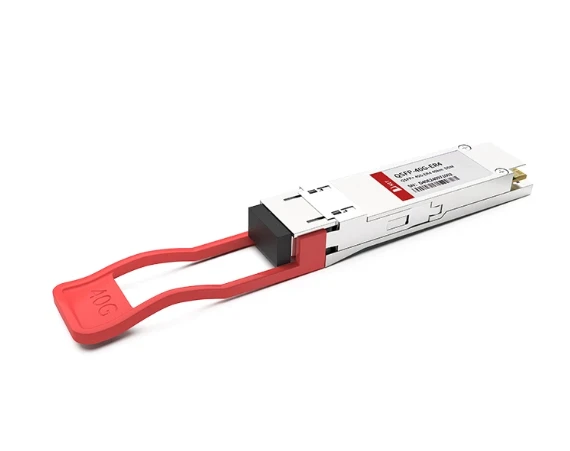
Optical transceivers are intelligent modules that enable bi-directional data transmission over fiber optic cables. At the heart of their operation lies the conversion of electrical signals to light waves for sending data and reconverting received light waves back into electrical signals for processing. During transmission, an electric signal from a network device is first amplified and then used to modulate a laser or LED, emitting light pulses of varying intensity. These light pulses are filtered to match a specific wavelength before being launched into the fiber. On the receiving end, an optical transceiver detects the incoming light, which is then converted back into an electrical signal through a photodiode. This electrical signal is then amplified, cleaned up, and decoded to retrieve the original data for further processing by connected network equipment. Advanced transceivers may also include onboard diagnostics to monitor and ensure signal integrity throughout the communication process.
Certifications
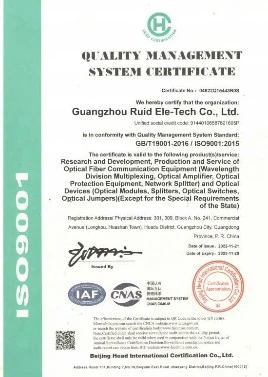




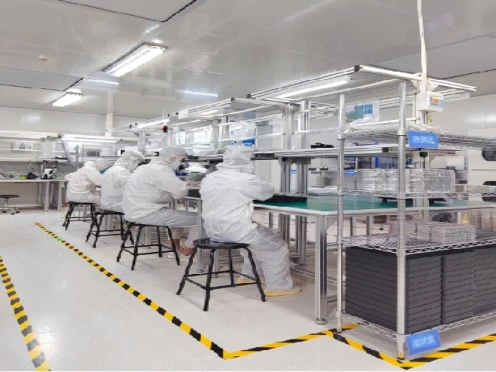
Our factory & quipment
FAQ
We're well-known as one of the leading optical transceivers manufacturers and suppliers in China. If you're going to buy high quality optical transceivers made in China, welcome to get quotation from our factory.
DDM40-1U01-C2160, Mechanical Optical Switch, QSFP28-2X50G-AOC