What are the differences between PM Filter WDM and TFF WDM?
Wavelength division multiplexing (WDM) technology is an important innovation in the field of optical fiber communication, which significantly improves the transmission bandwidth and network transmission capacity of optical fibers by simultaneously transmitting multiple optical signals of different wavelengths in a single fiber. In WDM technology, TFF (Thin Film Filter) WDM and PM (Polarization Maintaining) Filter WDM are two common implementations. There are significant differences in their working principle, structural characteristics and application scenarios.
1. Working principle and structural characteristics
PM Filter WDM
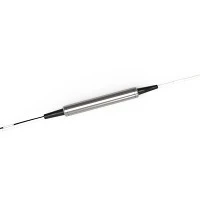
Unlike TFF WDM, PM Filter WDM devices pay special attention to maintaining the polarization state of the optical signal in addition to the function of wavelength separation and multiplexing. To achieve this goal, PM Filter WDM devices are designed with special materials and structures, such as polarimetric holding fibers. These special designs ensure that the polarization state of the optical signal remains unchanged during transmission.
Structurally, PM Filter WDM devices also contain filter components, but pay more attention to the use of polarization holding fibers. These fibers have special structures and materials that ensure that the polarization state of the optical signal is not affected during transmission. In addition, in order to meet the requirements of polarization preservation, PM Filter WDM devices need to adopt more complex technologies and processes during the design and manufacturing process.
TFF WDM
The core of TFF WDM device is the thin film filter composed of multilayer dielectric film. These dielectric films have different refractive indices and thicknesses, and form interference filters through specific arrangements, which can reflect or transmit light signals of specific wavelengths. This filter structure enables TFF WDM devices to effectively separate and reuse optical signals of different wavelengths.
Structurally, TFF WDM devices are usually composed of multiple thin film filters, fiber optic collimators and couplers. These components, through precise assembly and debugging, ensure the accurate transmission and separation of optical signals. In addition, TFF WDM devices typically have a small size and a high degree of integration, which makes them widely used in fields such as fiber optic communication systems, data center interconnection, and broadband access.
2. Application scenarios and advantages
PM Filter WDM
PM Filter WDM devices are mainly used in polarization sensitive optical fiber communication systems, optical sensing systems and interferometers. In these applications, maintaining the polarization state of the optical signal is critical to the performance and stability of the system. As a result, PM Filter WDM devices ensure that optical signals of different wavelengths maintain their polarization state during multiplexing and demultiplexing, thereby improving system performance, stability, and reliability.
In addition, PM Filter WDM devices also have high flexibility and scalability. By adjusting the design and parameters of the filter, the optical signals of different wavelengths and polarization states can be precisely controlled. This makes PM Filter WDM devices have a wide application prospect in complex optical fiber communication systems and optical sensing systems.
TFF WDM
Because of its simple structure, low cost and easy integration, TFF WDM devices have been widely used in optical fiber communication systems, data center interconnection and broadband access. They can realize the multiplexing and demultiplexing of multiple optical signals of different wavelengths, so as to achieve the expansion of optical fiber transmission bandwidth through wavelength division multiplexing technology without increasing the cost of fiber laying.
In addition, TFF WDM devices also have high reliability and stability, which can meet the requirements of optical fiber communication system for transmission quality and stability. This makes TFF WDM devices an indispensable and important part in the field of optical fiber communication.
conclusion
In summary, TFF WDM and PM Filter WDM are two WDM devices with distinct differences in working principles, structures, and applications. TFF WDM focuses on wavelength separation and multiplexing, featuring simplicity, low cost, and ease of integration. PM Filter WDM emphasizes maintaining optical signal polarization, suitable for polarization-sensitive applications. The choice between them depends on specific needs and cost. As optical fiber communication technology advances, both devices will improve in performance and stability, expanding their applications and contributing further to modern information technology.