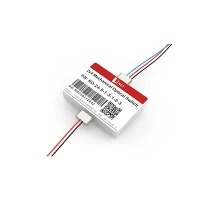
An Introduction to FWDM and Its Various Types
FWDM Overview
FWDM, or Filter Wavelength Division Multiplexing, represents a sophisticated method of multiplexing optical signals using filter chips. Leveraging mature film filter technology, FWDM boasts wide channel bandwidth, minimal insertion loss, exceptional channel isolation, and robust environmental stability and reliability. This technology allows for the seamless combination and separation of light signals across a broad wavelength range, making it indispensable in single-mode fiber communication systems and DFA applications, including erbium-doped optical amplifiers, Raman amplifiers, and WDM fiber networks.
Types of FWDM
FWDM technology encompasses various types tailored to different application scenarios and wavelength ranges. Here's an overview of some common FWDM types:
1,Three-Port Wavelength Division Multiplexer
The three-port WDM is a specialized FWDM technology designed to operate at three specific wavelengths (such as 1310nm, 1490nm, and 1550nm). This multiplexer is characterized by its straightforward design, reliable performance, and ease of maintenance, making it a popular choice for data centers, enterprise networks, and other environments.
2,Multi-Wavelength Wavelength Division Multiplexer
Beyond the three-port WDM, FWDM technology supports multiplexing across multiple wavelengths. The multi-wavelength wavelength division multiplexer offers flexibility in configuring the number of wavelength channels according to user needs, making it suitable for large-scale networks like wide area networks (WANs) and metropolitan area networks (MANs).
3,Tunable FWDM
Tunable FWDM is an emerging technology that utilizes tunable filters to dynamically adjust wavelength channels based on actual requirements. This technology offers high flexibility and scalability, aligning with future network development needs. However, due to its technical complexity, tunable FWDM is still in the research and development phase and has not yet been widely deployed in operational networks.
Application and Advantages of FWDM
FWDM finds extensive application in optical fiber communication systems, particularly in scenarios requiring high capacity and long-distance transmission. Its primary advantage lies in its ability to transmit multiple optical signals of varying wavelengths simultaneously within the same fiber, significantly enhancing fiber transmission capacity. Additionally, FWDM exhibits excellent environmental stability and reliability, ensuring consistent performance even under harsh conditions.
In conclusion, as an advanced WDM technology, FWDM plays a pivotal role in optical fiber communication systems. With ongoing technological advancements and growing market demand, the prospects for FWDM applications continue to broaden.