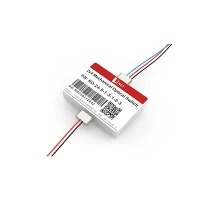
The role of optical transceiver is primarily reflected in the following aspects:
Signal Conversion: The core function of optical modules is to convert electrical signals into optical signals, or vice versa. This conversion capability allows data to be transmitted via fiber optic cables at high speeds and over long distances.
Data Transmission: In fiber optic communication systems, optical modules enable data transmission between different network devices, supporting connections between local area networks (LANs), wide area networks (WANs), and within data centers.
Enhancing Bandwidth: As data demands grow, optical modules support higher data transmission rates, thereby enhancing the network's bandwidth to meet the needs of big data, video streaming, cloud computing, and other applications.
Extending Transmission Distance: Optical modules, when used with fiber optic cables, can extend the transmission distance of signals, especially when using single-mode fiber, which can achieve transmission over dozens or even hundreds of kilometers.
Resistance to Electromagnetic Interference: Optical signal transmission is not affected by electromagnetic interference, making optical modules very useful in complex electromagnetic environments or where high reliability is required.
Energy Efficiency: Compared to traditional copper wire transmission, fiber optic transmission is more energy-efficient over long distances because the signal attenuation is low, requiring fewer amplifications or regenerations.
Network Upgrades: The pluggable design of optical modules allows for easy network upgrades without the need to replace the entire system; simply the corresponding optical modules to support higher transmission speeds.
Flexibility and Scalability: Optical modules support a variety of different interface standards and protocols, making network design highly flexible and scalable.
Support for Multiple Wavelengths: Some advanced optical modules support multi-wavelength operations, which is particularly important in wavelength-division multiplexing (#WDM) systems, allowing multiple signals to be transmitted simultaneously over the same fiber.
Improving Network Performance: By using optical modules, networks can achieve lower latency and higher data transmission quality, thereby improving overall network performance.
The functions of optical modules make them an indispensable part of modern communication networks, especially in situations that pursue high speed, high reliability, and long-distance transmission.