


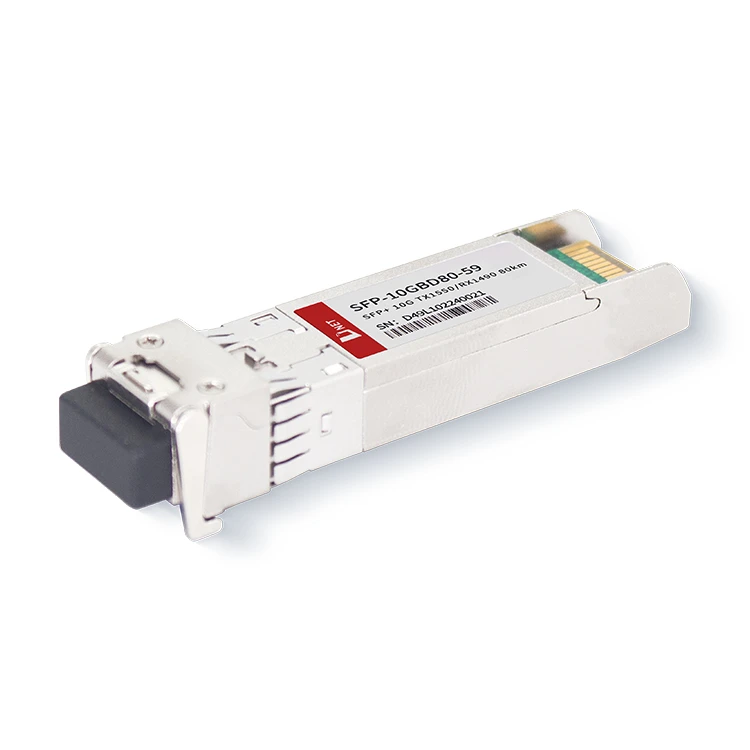
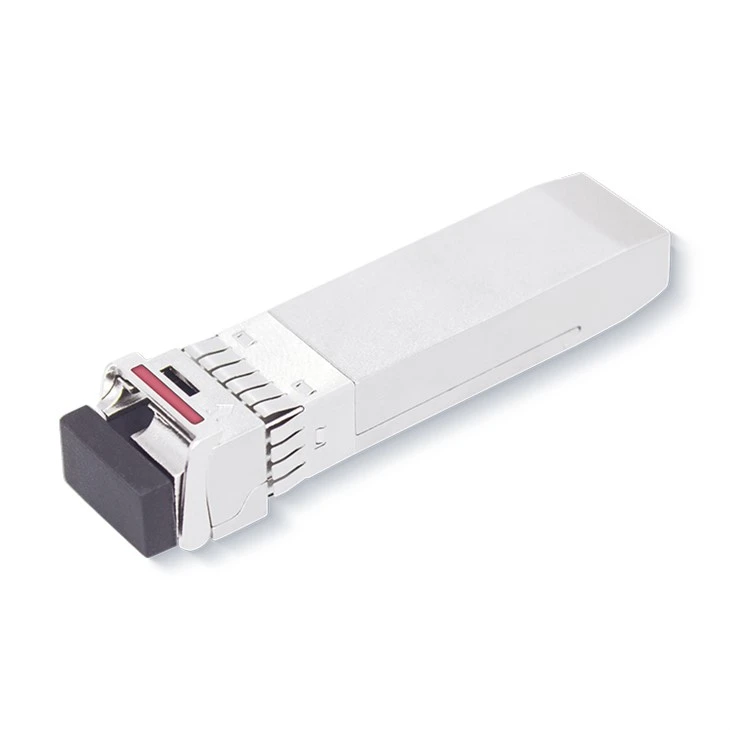
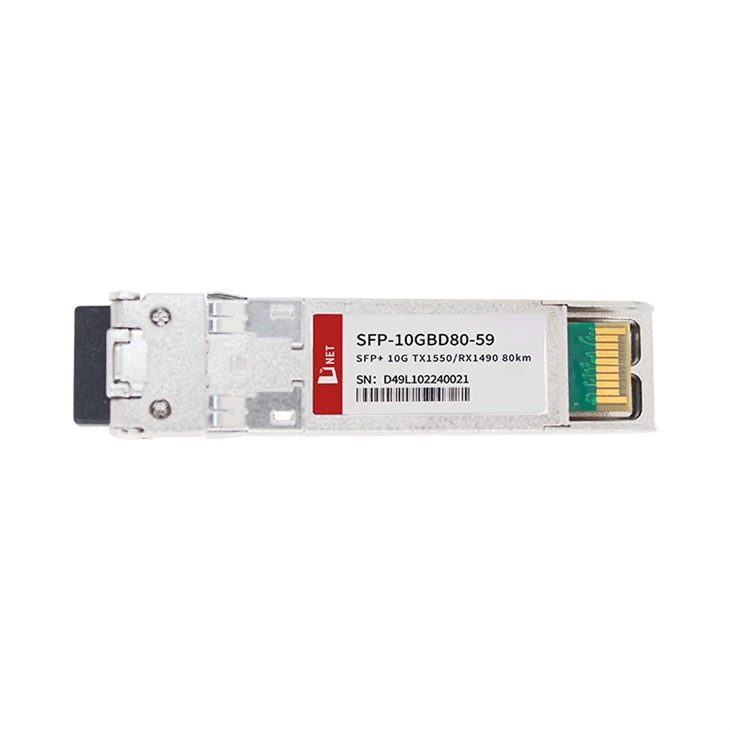
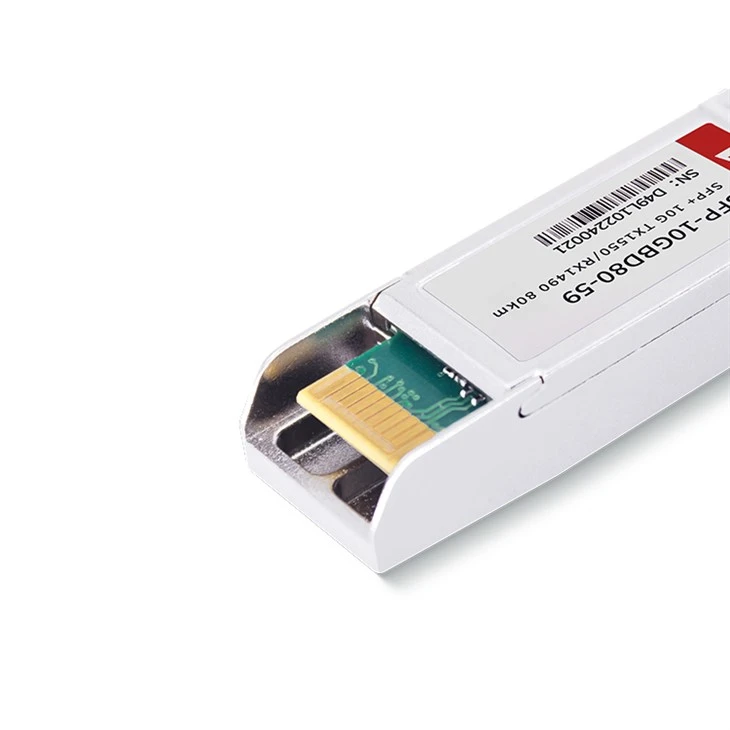
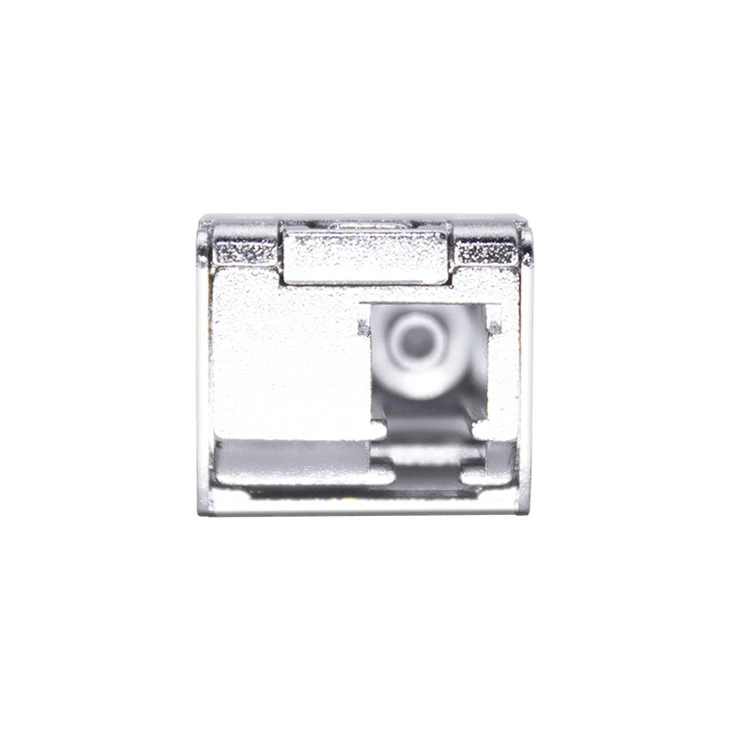
Product Details
The 10G BIDI 80KM 1550nm optical transceiver is compatible with a range of networking standards, such as Gigabit Ethernet, Fiber Channel, and SONET/SDH. It provides high-performance and stable transmission over extended distances, rendering it ideal for applications that necessitate high-speed, long-range connectivity in the realms of telecommunications, data centers, and enterprise networks.
Hot Tags: SFP+10G BIDI 1550nm 80KM, China SFP+10G BIDI 1550nm 80KM manufacturers, suppliers, factory, SFP-10G-BIDI-1330-10, SFP-10G-BIDI-1550-80, SFP-10G-BIDI-1490-80, SFP-10G-BIDI-1270-10
Absolute Maximum Ratings
|
Parameter |
Symbol |
Min. |
Typical |
Max. |
Unit |
|
Storage Temperature |
TS |
-40 |
+85 |
°C |
|
|
Case Operating Temperature |
TA |
0 |
70 |
°C |
|
|
Maximum Supply Voltage |
Vcc |
-0.5 |
4 |
V |
|
|
Relative Humidity |
RH |
0 |
85 |
% |
Electrical Characteristics
(TOP = 0 to 70 °C, VCC = 3.135 to 3.465 Volts)
|
Parameter |
Symbol |
Min. |
Typical |
Max. |
Unit |
Note |
|
Supply Voltage |
Vcc |
3.135 |
3.465 |
V |
||
|
Supply Current |
Icc |
500 |
mA |
|||
|
Power Consumption |
P |
1.8 |
W |
|||
|
Transmitter Section |
||||||
|
Input differential impedance |
Rin |
100 |
Ω |
1 |
||
|
Tx Input Single Ended DC Voltage Tolerance (Ref VeeT) |
V |
-0.3 |
4 |
V |
||
|
Differential input voltage swing |
Vin,pp |
180 |
700 |
mV |
2 |
|
|
Transmit Disable Voltage |
VD |
2 |
Vcc |
V |
3 |
|
|
Transmit Enable Voltage |
VEN |
Vee |
Vee+0.8 |
V |
||
|
Receiver Section |
||||||
|
Single Ended Output Voltage Tolerance |
V |
-0.3 |
4 |
V |
||
|
Rx Output Diff Voltage |
Vo |
300 |
850 |
mV |
||
|
Rx Output Rise and Fall Time |
Tr/Tf |
30 |
ps |
4 |
||
|
LOS Fault |
VLOS fault |
2 |
VccHOST |
V |
5 |
|
|
LOS Normal |
VLOS norm |
Vee |
Vee+0.8 |
V |
5 |
Note
1. 20%~80%
2. Connect directly to the TX data input pin. AC coupling from the pin to the laser driver IC.
3. LOS is an open collector output. The 4.7k-10 kΩ shall be opened on the motherboard. Normal operation is logic 0, and the signal loss is logic 1. The maximum pull-up voltage is 5.5V.
Optical Parameters
(TOP = 0 to 70°C, VCC = 3.135 to 3.465 Volts)
|
Parameter |
Symbol |
Min. |
Typical |
Max. |
Unit |
Note |
|
Transmitter Section |
||||||
|
Center Wavelength |
λt |
1490 |
nm |
|||
|
λt |
1550 |
nm |
||||
|
Spectral width |
Δλ |
0.3 |
nm |
|||
|
Average Optical Power |
Pavg |
0 |
+5 |
dBm |
1 |
|
|
Optical Power OMA |
Poma |
-2.1 |
dBm |
|||
|
Laser Off Power |
Poff |
-30 |
dBm |
|||
|
Extinction Ratio |
ER |
8.2 |
dB |
|||
|
Transmitter Dispersion Penalty |
TDP |
3.0 |
dB |
2 |
||
|
Relative Intensity Noise |
Rin |
-128 |
dB/Hz |
3 |
||
|
Optical Return Loss Tolerance |
21 |
dB |
||||
|
Receiver Section |
||||||
|
Center Wavelengt |
λr |
1490 |
nm |
|||
|
λr |
1550 |
nm |
||||
|
Receiver Sensitivity |
Sen |
-23 |
dBm |
4 |
||
|
Los Assert |
LOSA |
-34 |
- |
dBm |
||
|
Los Dessert |
LOSD |
-24 |
dBm |
|||
|
Los Hysteresis |
LOSH |
0.5 |
dB |
|||
|
Overload |
Sat |
-7 |
dBm |
5 |
||
|
Receiver Reflectance |
Rrx |
-26 |
dB |
|||
Ordering Information
|
Part Number |
Description |
|
SFP-10GBD80-59 |
10Gb/s SFP+ BIDI 80KM Transceiver Hot Pluggable, Single LC, +3.3V, 1550/1490nm EML&APD, Single mode |
FAQ
1. What is the difference between SFP and BiDi?
A: A common SFP transceiver is generally with two ports, one is TX port to transmit the signal, and the other one is RX port to receive signals. BiDi SFP transceiver is only with one port which uses an integral WDM coupler to transmit and receive signals over a single strand fiber.
2. What is BiDi in SFP module?
A: The SFP+ BIDI 80KM transceiver is a high-performance, cost-effective module that supports dual data rates of 10 Gbps and 80km transmission distance with SMF.These SFPs use Wavelength Division (WDM) technology, mixing two wavelengths simultaneously. These modules each accept 1 LC connector.
3. What is a BiDi port?
A: Unlike traditional optical transceivers that have two ports, the BiDi transceiver has only one port. In order to accommodate the transmission in both directions on only one optical fiber.


