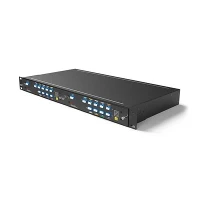
DWDM and CWDM are commonly used technologies in fiber optic communication for simultaneously transmitting multiple optical signals of different wavelengths. They differ in the following aspects:
Wavelength Interval: CWDM, Wavelength interval≥20nm, usually using eight bands from 1470 to 1610nm with an interval of 20nm.DWDM has a smaller wavelength interval, usually 0.8nm or less, so more wavelength signals can be tightly packed in optical fibers.
Cost: In general, CWDM equipment and components are relatively inexpensive due to their lower technical requirements and complexity. In contrast, DWDM equipment and components are more expensive because they require more precise wavelength control and smaller wavelength spacing.
Distance: DWDM systems can further extend transmission distance through amplifiers, suitable for longer distance transmission, while CWDM is suitable for shorter distance transmission, generally within a range of tens of kilometers.
Application scenarios: DWDM, due to its high-density wavelength reuse characteristics, is suitable for long-distance, high-speed, and high-capacity optical communication scenarios, such as connecting remote data centers or achieving remote backup and disaster recovery. Due to its lower cost and simple deployment, CWDM is more suitable for medium to short distance transmission and is typically used in urban and regional networks.